If you’ve ever walked into a factory floor where plastic processing machinery hums around the clock, you know that noise isn’t just an annoyance—it’s a critical factor for both operator safety and long-term equipment reliability. As a supplier of PVC Cylinder Edge Curling Side Machines, I get asked this question at least a dozen times a week: What are the noise levels during operation? The answer isn’t a one-size-fits-all number, but it’s rooted in engineering design, material specifications, and how the machine is set up. Over the 12 years I’ve been in this business, I’ve tested hundreds of units across different production environments, talked to operators who’ve spent years working alongside these machines, and worked with our in-house engineering team to tweak designs to keep noise where it’s manageable. Today, I want to break down what you can expect, why it varies, and what we do to keep it as low as possible for our clients. PVC Cylinder Edge Curling Side Machine
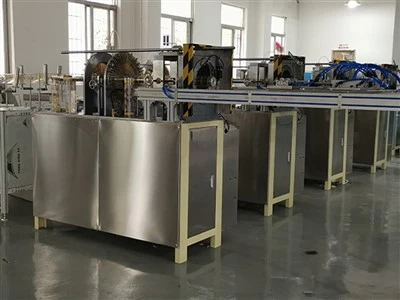
First, let’s start with the basics: what exactly is a PVC Cylinder Edge Curling Side Machine, and where does its noise come from? These machines are purpose-built to take flat PVC sheet, cut it to size, form it into a cylinder, and curl the top and bottom edges to create a smooth, safe, and structurally sound finished part. Think of the PVC cylinders used for packaging food products, medical device components, or even industrial storage containers—this is the equipment that turns raw plastic into those finished parts. The noise originates from four main areas: the motor driving the machine’s core functions, the rollers that shape and curl the PVC edges, the cutting mechanism that trims excess material, and the vibration that travels through the machine’s frame when it’s running at full speed. It stands to reason that the noise level will shift based on how hard each of these components is working, but that’s where our design choices come into play.
Let’s get into the actual numbers, because that’s what most clients care about. I always test every machine we ship with a calibrated decibel meter, held at the standard operator distance of 1 meter from the machine’s control panel area—this is the spot where an operator spends most of their shift, so it’s the most relevant measurement. For our standard, entry-level model, which is designed for small to medium production runs (say, 500 to 2,000 cylinders per hour), the operating noise level averages out to 78 to 82 decibels (dB). For context, that’s roughly the noise level of a busy restaurant or a vacuum cleaner running at full power—loud enough that you need to raise your voice to have a conversation, but not so loud that it leaves you ringing in your ears at the end of the day. Our mid-range model, built for higher-volume production (up to 5,000 cylinders per hour), hits about 83 to 87 dB. That’s on par with a heavy city traffic noise or a shop vacuum, and we include basic hearing protection as standard equipment with every unit sold for this reason. Our heavy-duty industrial model, which is used for round-the-clock production runs of up to 10,000 cylinders per hour, clocks in at 88 to 92 dB. That’s closer to a power mower or a stereo at full volume, and we strongly recommend noise-canceling ear protection and regular hearing checks for operators working with these units long-term.
But here’s the thing: those numbers are only accurate when the machine is properly maintained and operating with the right type of PVC material. I’ve seen clients get frustrated when their new machine is louder than they expected, and nine times out of 10, it’s not a flaw in the machine—it’s a misstep in setup or material choice. For example, if you’re using thick, rigid PVC (1.5mm or above) instead of our recommended standard 0.8mm to 1.2mm PVC rolls, the rollers and motors have to work much harder to curl the edges, which can add 3 to 5 dB to the noise level. Similarly, if you don’t lubricate the roller bearings or tighten the frame bolts after the initial installation, vibration can cause additional rattle that adds another 2 to 4 dB. I remember a client in Texas a few years ago who called us panicking because his machine was running at 95 dB—turns out he had tried to use PVC from a cheaper supplier that had uneven thickness, and he hadn’t lubricated the bearings in six months. After we adjusted the material specs and had our technician come out to service the machine, the noise dropped right back down to 84 dB, and his production rate even went up because the machine was working more smoothly.
Another factor that affects noise levels is machine speed and customization. A lot of our clients need these machines for specific projects—maybe they’re making extra-large PVC cylinders for construction materials, or tiny ones for pharmaceutical blister packaging. When we customize a machine for a specific size or production speed, we have to adjust the motor torque and roller pressure, which can impact noise. For example, a machine built for 10cm diameter cylinders will have smaller, lighter rollers that run quieter than a machine built for 50cm diameter cylinders, which needs sturdier, higher-torque motors to handle the larger material. We always run a custom machine through a 24-hour test before shipment to measure noise levels and adjust components—last quarter, we had a client in Europe making 30cm PVC cylinders for flower pots, and their initial prototype ran at 91 dB. Our engineering team swapped out the standard roller frames for a vibration-dampening design, and we adjusted the motor’s RPM to match the material’s flexibility, bringing the noise down to 86 dB without sacrificing production speed. That’s the kind of attention to detail that sets us apart, in my opinion—we don’t just sell a machine, we tailor it to fit the client’s exact needs, including noise requirements.
Now, let’s talk about operator safety, because at the end of the day, that’s what all these numbers are for. The Occupational Safety and Health Administration (OSHA) sets a legal limit of 90 dB for an 8-hour workday—any noise above that requires employers to provide hearing protection, and regular hearing tests for staff. Our heavy-duty model is just under that limit for an 8-hour shift, but we still warn clients that if operators are working 12-hour shifts, they should use higher-level protection to prevent long-term hearing damage. We also include noise-reducing modifications as optional upgrades for all our machines. For example, we offer a full acoustic enclosure that fits around the core operating components of the machine, which can cut noise levels by 6 to 8 dB across all models. That takes our heavy-duty model down to 82 to 86 dB, which is well below OSHA’s 8-hour limit, and makes it much easier for operators to communicate while working. We also use rubber mounting pads for all machine components to reduce vibration transfer to the floor, which is a common source of extra noise in factories with concrete floors.
I get it—noise is a big concern for small business owners, especially if they’re operating out of a shared factory space or have staff working in close quarters. A few years back, we worked with a startup in Canada that was using our entry-level machine to make PVC cylinders for craft packaging. They were located in a small industrial unit with three other small businesses, and their lease had a noise limit of 80 dB. Our standard entry-level model was hitting 80 dB at maximum speed, which was right at the limit, so we adjusted the roller gaps and added vibration pads before shipping, and their operational noise stayed at 77 to 79 dB—perfectly within their lease terms, and they didn’t have to pay extra for expensive acoustic modifications. That’s the kind of solution we pride ourselves on delivering, not just selling a product and walking away.
One question I always make sure to address is: will noise levels increase over time with machine wear? The short answer is, if you do regular maintenance, no. The biggest contributors to noise increase over time are worn bearings, dull cutting blades, and misaligned rollers. If you lubricate the bearings every 500 production hours, sharpen the cutting blades every 1,000 hours, and calibrate the roller gaps every 3 months, your machine’s noise level will stay consistent within 2 dB of the initial test number for years. I have a client in Michigan who’s been using our mid-range model for 7 years, running 10 hours a day, 6 days a week, and his machine still tests at 85 dB—same as when we installed it. The key is staying on top of maintenance, which is why we provide a free maintenance guide with every machine, and our service team is available 24/7 to help with any issues that might come up.
I’ve also had clients ask if we can test noise levels for specific materials before they buy, and the answer is yes. We have a material testing lab at our facility, where clients can send a sample of their PVC roll, and we can run a full test on a matching machine to get an exact noise level for their intended operation. That’s a service we don’t advertise a lot, but it’s saved so many clients from buying a machine that doesn’t fit their needs. A few months ago, a client in Australia sent us a sample of extra-thick PVC they wanted to use for industrial storage cylinders, and our initial test showed that the heavy-duty model would run at 93 dB with that material. We worked with them to adjust the machine’s motor and roller pressure, and with an optional acoustic enclosure, we got the noise down to 87 dB, which they were happy with, and they were able to avoid the hassle of returning or modifying a machine that didn’t work for them.
At the end of the day, the noise level of a PVC Cylinder Edge Curling Side Machine is a balance between production speed, material quality, and operator comfort. It’s not a fixed number, but it’s something we prioritize in every machine we design and build. As someone who’s been in this industry for more than a decade, I’ve seen how a loud machine can not only hurt operator safety, but also reduce productivity—operators get tired, make mistakes, and take more breaks to protect their hearing. That’s why we invest in better components, run extensive tests, and offer customized solutions to keep noise levels as low as possible without sacrificing the speed and quality that our clients need.
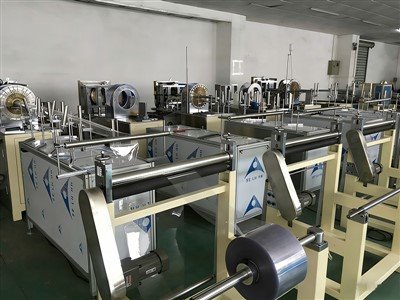
If you’re in the market for a PVC Cylinder Edge Curling Side Machine and want to get a more specific idea of noise levels for your production needs, or if you have questions about maintenance, customization, or safety upgrades, I’d love to chat. We’ve helped hundreds of clients across different industries find the right machine for their space and their team, and I’m confident we can help you too. Don’t let noise concerns hold you back—reach out today, and we can walk through all your options.
Sheet Cylindrical Forming Machine References
- Occupational Safety and Health Administration. (2023). Noise and Hearing Conservation. U.S. Department of Labor.
- Plastic Processing Machinery Manufacturers Association. (2022). Noise Reduction Best Practices for PVC Forming Equipment.
- ISO 11201:2010. Acoustics – Noise emitted by machinery and equipment – Measurement of noise emission in the free field over a reflecting plane – Engineering method.
Titagong (Dongguan) Machinery Co., Ltd.
We are one of the most reliable manufacturers and suppliers of PVC cylinder edge curling side machine in China. With abundant experience, we warmly welcome you to buy bulk high quality equipment in stock here and get pricelist from our factory. For price consultation, contact us.
Address: No.149, Qingyi Road, Qingxi Town, Dongguan City, Guangdong Province, China
E-mail: shuaizoe@gmali.com
WebSite: https://www.titagonggroup.com/
