If you’ve ever stood next to a conveyor belt that suddenly lurches to life, or a garage door motor that pulls a heavy panel open without hesitation, you’ve experienced starting torque in action. As an AC motor supplier, I get asked about this term all the time—usually from guys who need their new motor to do more than just spin; they need it to overcome that first big “dead weight” of a load, whether that’s a packed pallet on a line, a stuck fan blade, or a lift truck with a full load. Let’s break this down like I would over a coffee at a trade show—no jargon overload, just the real deal on what starting torque actually is, why it matters, and how to pick a motor that gets the job done right. AC Motor
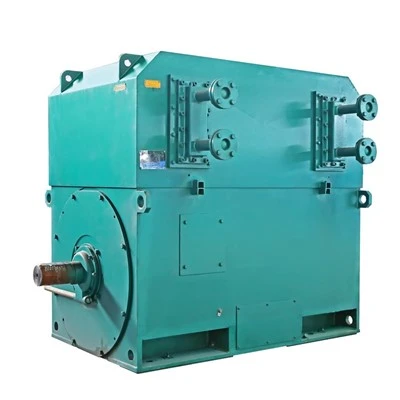
First off, let’s keep it simple: starting torque is the twisting force an AC motor produces the second it kicks on, right when it’s going from 0 RPM to moving. Think of it like pushing a parked car—you don’t need much force once it’s rolling, but getting it to shift from dead stop takes a big burst of effort. That burst is exactly what starting torque is for a motor. It’s not the same as the torque you get when the motor’s already humming along at full speed (that’s called running torque, by the way); starting torque is the make-or-break number for loads that don’t want to move at first.
Now, here’s the thing that trips a lot of customers up: not all AC motors make the same starting torque. I’ve had a guy come to me last month panicking because his old motor kept stalling when he tried to run a 500lb packaged food conveyor. He thought just matching the voltage and horsepower would work, but nope—his old motor had way too low starting torque to budge the packed pallets. That’s the mistake so many people make: they look at the spec sheet and only check HP, but starting torque is non-negotiable for heavy, inert, or stuck loads.
Let’s talk about the two main types of AC motors we deal with every day, because their starting torque is totally different. First up: the induction motor, which is the workhorse of industrial applications. Most of the motors we supply are single or three-phase induction motors, and they come in two flavors for starting torque: split-phase and capacitor-start. Split-phase motors are cheap, but their starting torque is low—like, only 100-200% of their full-load torque. That works for light stuff, like a small fan or a garage door opener, but not for heavy loads. Capacitor-start induction motors, though? They pack way more punch—usually 200-300% of full-load torque. That’s the one we push for conveyors, pumps, and any load that’s stubborn at first.
Then there’s the synchronous motor, which is less common but used for specific jobs that need constant speed. Their starting torque is lower, usually around 150% of full-load, so they’re not the best for heavy starting loads. We only recommend them for things like large HVAC fans where speed consistency matters more than that first big push.
Wait, let’s get into why starting torque drops sometimes, because that’s a huge pain point for our customers. I’ve had another customer call me at 2 AM because his new motor was stalling 10 minutes after he installed it on a wastewater pump. Turned out the voltage at his site was 10% lower than the motor’s rated voltage. Here’s the science: torque in an AC motor is proportional to the square of the voltage. So if voltage drops 10%, torque drops almost 20%. That’s a massive hit. So if your load needs 250% starting torque at full rated voltage, a 10% voltage dip could drop that to 200%—which might not be enough to get the load moving. That’s why when we’re talking to customers, we always ask about their site’s voltage consistency, not just their load size.
Another factor that affects starting torque is the motor’s design. For example, we have NEMA Design B induction motors—those are the standard ones most people buy. Their starting torque is around 150% of full-load, which is fine for medium loads, but if you need higher, we go with NEMA Design C motors. Design C motors have a special rotor design that gives them starting torque of 250-300%—perfect for those stuck conveyors or pumps that get clogged with debris. We also do NEMA Design D for super high starting torque, up to 350%—that’s for things like cranes or heavy lift equipment where you need that extra burst to get the load moving fast without stalling.
Let’s use a real example to make this concrete. Last quarter, we worked with a customer who runs a grain elevator. They needed a motor for their leg conveyor that lifts 2 tons of grain per minute. Their old motor was a standard Design B, and it kept stalling when the conveyor had a full load of wet grain sticking to the sides. We swapped it for a Design C 5HP three-phase motor. The starting torque went from 150% to 275%, and now the conveyor lurches into motion every time—no more stalls, no more downtime that costs them thousands in lost grain shipments. That’s the difference between knowing your starting torque and guessing.
A lot of people also confuse starting torque with “breakdown torque” or “pull-up torque,” so let’s clear those up because we get that question all the time. Breakdown torque is the maximum torque a motor can produce without stalling while it’s already running—so that’s for if the load gets heavier while it’s moving, not for starting. Pull-up torque is the torque the motor makes at some point between 0 RPM and full speed, basically the torque it needs to keep pulling once it’s partially started. Starting torque is only the torque at 0 RPM, the very first split second the motor turns on. That’s the one you need to nail first.
Now, I know what you’re thinking: “How do I calculate how much starting torque I need?” Let’s keep it real—you don’t have to do complicated math, but there’s a rough rule of thumb we use with our customers. First, figure out your load’s “starting resistance.” For most industrial loads, you need a motor that has starting torque of at least 125-150% of the load’s required torque to move from dead stop. But if your load is heavy (like full conveyors, grain elevators, or pumps with clogged impellers), you bump that up to 200-300%. If you’re not sure, that’s why we’re here—we don’t just sell motors, we help customers match the right torque to their specific job. I once had a customer try to calculate it themselves and ordered a motor that was 2HP too small because they forgot to account for friction in the conveyor bearings. They ended up bringing it back, and we got them the correct motor in 24 hours—no hassle, no extra downtime.
Also, let’s talk about common myths I hear all the time. First myth: “Higher horsepower means higher starting torque.” Nope, not at all. A 10HP Design B motor might have lower starting torque than a 5HP Design C motor. HP is about how much work you can do over time; starting torque is about that first burst. So never let HP be the only number you check. Second myth: “Wiring a motor wrong won’t affect starting torque.” Wait, yes it does. If you wire a three-phase motor wrong (like mixing up two phases), it might not spin at all, but if you under-size the wiring, that causes voltage drops at the motor terminals, which we already know kills starting torque. That’s why we always give customers wiring specs tailored to their motor and their site—cheap wiring is a false economy.
As an AC motor supplier, our job isn’t just to ship a box. We’ve seen too many customers waste money on the wrong motor because they ignored starting torque. Last year, a small manufacturing company ordered a cheap motor online for their packaging line, and it kept stalling every time the line had 10 boxes lined up. They tried adding a VFD (variable frequency drive) to fix it, but the VFD couldn’t make up for the low starting torque of the cheap motor. They ended up calling us, and we swapped out their 2HP standard motor for a 2HP Design C motor. The difference was night and day—no more stalls, no more repairs, and they saved money in the long run instead of wasting cash on a bad motor and a useless VFD.
If you’re out there shopping for an AC motor right now, take 2 minutes before you hit “buy” and ask yourself: What’s my load’s starting resistance? Is it going to be moving light stuff, or heavy, maybe even stuck, stuff? What’s my site’s voltage consistency? If you can answer those, or even if you can’t, reach out to us. We don’t push the most expensive motor; we push the right one for your job. We’ve worked with small shops and big industrial facilities, and we know that when starting torque is right, downtime goes down, productivity goes up, and headaches go away.
At the end of the day, starting torque isn’t just a spec on a sheet. It’s the difference between a motor that works when you need it and one that leaves you troubleshooting at 2 AM. It’s the burst of force that gets your conveyor moving, your grain lifting, your pump priming. As someone who’s been in the motor game for years, I can tell you: don’t sleep on this number. The old saying goes, “You don’t know you need it until you don’t have it”—that’s exactly starting torque.
If you’re tired of stalling motors, lost downtime, or wrong specs that cost you money, get in touch with our team. We’ll walk you through your needs, send you a motor with the right starting torque for your load, and make sure it’s set up to work for you. No jargon, no hidden fees, just good old-fashioned AC motor advice that works.
AC Motor References
- Fitzgerald, A. E., Kingsley, C., Umans, S. D., & Bogart, F. (2003). Electric Machinery (6th ed.). McGraw-Hill.
- NEMA Standards Publication MG 1-2021: Motors and Generators. National Electrical Manufacturers Association.
- Boldea, I., & Nasar, S. A. (2010). The Induction Machine Handbook (2nd ed.). CRC Press.
- Practical Guide to AC Motor Selection. Electrical Construction & Maintenance Magazine, 2019.
Xian Putai Electric Motor Equipment Co., Ltd.
Xian Putai Electric Motor Equipment Co., Ltd. is one of the most professional ac motor manufacturers and suppliers in China, also supports customized service with low price. Welcome to buy advanced ac motor in stock here from our factory. If you have any enquiry about quotation, please feel free to email us.
Address: Haibo Guangchang Fengcheng Nine Road Economical & Technological Development District Xi’an City Shaanxi Province – China
E-mail: sales@putaimotor.com
WebSite: https://www.putaimotor.com/
