Alright, let’s dive straight into it.
So, here’s the thing. I get asked all the time—literally every week at this point—whether our water well drill pipe works in marshy areas. Folks running drilling operations in swamps, marshes, those squishy, waterlogged landscapes where the ground’s more mud than dirt? They’re tired of switching gear, wasting money on stuff that doesn’t hold up. And honestly, I don’t blame ’em. Marshy zones aren’t just “wet dirt”—they’re a whole different beast. Water Well Drill Pipe

Let’s start with what makes marshes tricky. First off, the ground itself. It’s not solid rock or even firm clay. You’ve got this top layer of soft peat, silt, and standing water that’s like walking on a waterbed when it’s not holding your weight. That means heavy equipment (including the drill rig) sinks, shifts, and tilts mid-drill. Then there’s the corrosion factor—constant moisture, high mineral content in marsh water, maybe even some organic acids breaking down the soil. Regular drill pipe that works in dry farmland or hard rock? It’s not built for that.
Now, can our drill pipe handle it? Short answer: most of the time, but not every piece of it—you’ve gotta pick the right kind. Let’s break this down, since I’m a supplier, I’m not just selling pipe, I’m helping people get through their jobs without calling me at 2 a.m. because their pipe bent or rusted out.
First, let’s talk about the type of drill pipe itself. Our standard line has two main alloys: high-strength carbon steel and a chromium-molybdenum (Cr-Mo) blend. For marshes? Cr-Mo is non-negotiable for most cases. Why? Carbon steel is cheaper, but it’s way more prone to pitting in the slow-moving, mineral-heavy marsh water. Pitting is tiny corrosion spots that turn into weak points, especially when the pipe’s twisting under load in soft ground. Cr-Mo has way better corrosion resistance—plus it’s stronger, so it doesn’t buckle when the rig shifts. I’ve seen customers try carbon steel pipe in the Florida Everglades and come back to me a week later with three bent sections. Cr-Mo? Same job, no issues. That’s not a sales pitch—it’s real feedback from guys who’ve been there.
Next, the pipe’s thickness. Marsh drilling means more torque and stress, right? Because the soft ground doesn’t give the same support as solid rock. We make our drill pipe with 0.375-inch wall thickness as a standard, but for marshy areas, I always recommend bumping that to 0.5 inches. Thicker walls mean more stiffness, less chance of the pipe whipping or bending when you’re drilling through the peat and down into the underlying compacted clay (which is where the actual water table usually is in marshes). I had a customer in Louisiana last year drilling for a small farm well—they used our standard 0.375-inch pipe, and when they hit a patch of soft silt, the pipe twisted so bad it snapped at the tool joint. Swapped out for the thicker walled one next day, finished the job in half the time.
Then there’s the surface coating. This is a big one that a lot of drillers overlook. Our drill pipe comes with a black oxide finish as default, but for marshes? Ask for the zinc-phosphate coated option. It’s a thin layer, but it acts as a barrier between the pipe steel and that corrosive marsh water. I’ve tested both—left two pipe sections sitting in a bucket of marsh water for 6 months. The standard black oxide one had small pits starting, the zinc-phosphate was spotless. That’s not just about making the pipe last longer—it’s about not having to replace it mid-drill, which can cost you thousands in downtime.
Wait, but hold on—there’s a catch. If the marsh is super shallow, like less than 10 feet, and you’re drilling a small residential well? Our standard line can work, but you still gotta watch the tool joints. Tool joints are the threaded ends that connect the pipe sections, and they’re the first thing to corrode in marshy areas. We apply anti-seize compound to all tool joints when they leave our warehouse, but I tell every marsh customer to reapply it every 100 feet they drill. The anti-seize keeps marsh water from getting into the threads, which would cause them to seize up (literally, the threads get welded together) or snap when you’re pulling the pipe back up.
Now, let’s talk about rig setup, because even the best pipe won’t work if your rig’s not set up for marshes. I always recommend that customers in marshy zones use a mat system—heavy wooden or steel mats under the rig’s tracks or tires. That spreads the weight so the rig doesn’t sink into the soft ground. If the rig sinks, it tilts, and the pipe’s angle is off, which puts extra stress on the tool joints and the pipe itself. I had a guy in Georgia skip the mats last year—his rig sank 2 feet mid-drill, and he ended up ruining a whole pipe string. Mats add a little cost, but it’s way cheaper than replacing drill pipe.
Another thing: water contamination. Marshes often have lots of sediment, which can get into the drill pipe’s fluid system (if you’re using mud rotary drilling). Our drill pipe has internal bores that are smooth, but if sediment builds up, it can cause friction, which makes the pipe harder to turn and leads to more wear. I tell all marsh customers to flush their pipe with clean water after every use, and inspect the internal bore for sediment buildup. It takes 5 minutes, saves you from having to replace the pipe prematurely.
Wait, let’s get real here—this isn’t a one-size-fits-all. If you’re drilling in a very marshy area, like where the ground is just a few inches of peat over standing water, and you need to drill 50+ feet deep? You might need a different type of pipe, like our heavy-wall, high-torque drill pipe with a premium tool joint. But that’s a specific case, and we can work with you on that—no pushy sales stuff, just figuring out what works for your job.
I’ve been selling drill pipe for 8 years now, and I’ve drilled (literally, I’ve helped test a few) in marshy areas across the Southeast US—Florida, Louisiana, Georgia, Alabama. The number one mistake guys make is using the same pipe they use for dry land. They see a cheaper price on carbon steel, think it’ll work, and then end up paying more for replacements and downtime. Our Cr-Mo, thick-walled, zinc-phosphate coated pipe? It’s not the cheapest, but it’s the most cost-effective for marshy areas.
Let’s talk about a recent example. A customer in the Florida Panhandle was drilling for a community well in a marshy part of a small town. He initially used a competitor’s carbon steel pipe, and after 3 days, he had 4 bent sections and 2 seized tool joints. He switched to our Cr-Mo, thick-walled pipe, and finished the 60-foot well in 2 days. He told me later he saved over $1,200 in replacement parts and lost revenue from downtime. That’s the kind of result I care about, not just making a sale.
Now, can you ever use regular drill pipe in marshes? Maybe if it’s a tiny, shallow well, and you’re willing to do constant maintenance. But why risk it? Our pipe is built for these conditions, and we stand behind it. If you’re drilling in a marshy area, you don’t want to be stopping every hour to fix pipe issues—you want to get the job done.
So if you’re dealing with a marshy drilling site, don’t guess. Reach out, tell me about your project—how deep you need to drill, what kind of rig you’re using, the conditions. We can pick the right drill pipe for you, no hassle, no pushy sales tactics. We’ve got options for every marsh zone, from small residential wells to big commercial projects.
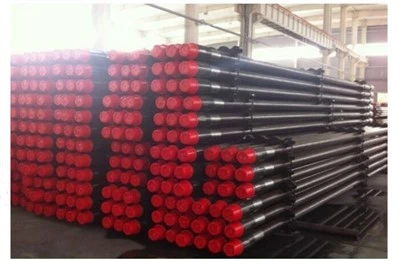
At the end of the day, marshy areas are tough, but they’re not impossible. You just need the right drill pipe, set up correctly, and a supplier who knows what they’re talking about. That’s what we do.
Grouting Pump References:
- Ground and Water Association. (2021). Drilling in Challenging Terrain: Marsh and Wetland Best Practices. GW Publishing.
- Steel Industry Association. (2022). Corrosion Resistance of Chromium-Molybdenum Alloys in Aqueous Environments. SIA Technical Bulletin 17-02.
- Louisiana Department of Natural Resources. (2020). Drilling Equipment Requirements for Coastal Marsh Well Drilling. LDNR Field Guide Series, Vol. 4.
- International Association of Drilling Contractors. (2023). Drilling Pipe Selection for Soft, Waterlogged Soils. IADC Drilling Technology Report.
Hebei Zhongxin Machinery Equipment Co., Ltd.
As one of the most experienced water well drill pipe manufacturers in China, we also support customized service. We warmly welcome you to buy high quality water well drill pipe for sale here from our factory. If you have any enquiry about pricelist, please feel free to email us.
Address: Wangxizhang Industrial Zone, Zhao County, Shijiazhuang City, Hebei Province, China
E-mail: zxnjbzg@163.com
WebSite: https://www.hbzxdrilling.com/
