Hey there, welcome to my little corner of the internet—if you’re here asking “What’s the fire rating of a steel fence?” you’re probably either a contractor prepping for a commercial build, a homeowner weighing security and safety, or maybe someone just doing their due diligence before picking a fence that won’t turn into a disaster if things go sideways. Full transparency, I’ve been in the steel fence game for over a decade, so I’ve answered this exact question, in one form or another, to so many clients I’ve lost count. Let’s break this down like we’re chatting over a coffee, no stuffy industry jargon that makes your eyes glaze over. Steel Fence
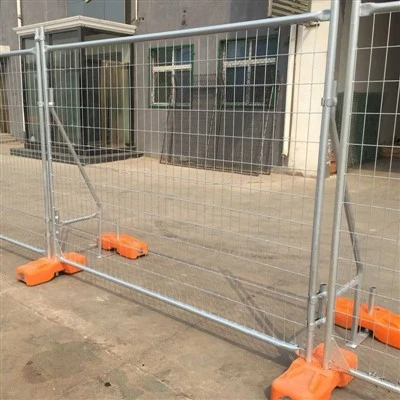
First off, let’s get one thing straight right away: steel is NOT fireproof. A lot of folks come in thinking “it’s metal, it won’t burn, that means it’s fire rated forever!” Nope, that’s a myth. Steel will warp, lose its structural strength, and even melt if exposed to extreme, sustained heat. But that’s where “fire rating” comes in—this is a test, not a guarantee that the fence will survive a wildfire or a building blaze. Think of fire rating like a tire’s speed rating: it tells you how long (and under what conditions) something performs as intended, not that it can handle anything thrown at it.
So, what’s the actual fire rating for most standard steel fences? Here’s the thing: most off-the-shelf residential steel fences, like the ones we supply for backyards or small side yards, aren’t tested to formal fire ratings at all. Wait, why? Because they’re made from thin steel—usually 12 to 16 gauge, if you’re into specs—and the average backyard blaze doesn’t come close to the temperatures that would cause them to fail. But if you’re dealing with a commercial space, a property right next to a wildfire zone, or a fence that’s part of a building’s exterior wall system? That’s when fire ratings matter. That’s the stuff we work on a lot with clients in wildfire-prone states like California, Oregon, or Colorado.
Let’s talk test standards, because that’s how these ratings are set, not just some number pulled out of thin air. The two main ones we reference are ASTM E119 and UL 263. ASTME119 is the big one for building materials—it simulates real building fires, heating up to 2,000 degrees Fahrenheit over a couple hours. UL 263 is similar, it’s the Underwriters Laboratories’ standard, same general goal, just a slightly different test setup. For steel fences that are actually fire-rated, the rating is typically 1 hour, 2 hours, or sometimes 3 hours. Wait, what does “1 hour rated” mean exactly? It means the fence was exposed to that controlled fire for 60 minutes, and during that time, it didn’t collapse, didn’t let heat or flames pass through it, and kept its shape enough to do its job. That’s not nothing.
Now, why does this matter for a steel fence, beyond just not turning into a heap of twisted metal? Let’s say you have a commercial warehouse, and it’s right next to another building that has a gas leak and catches fire. A standard fence might warp so bad that it falls over in 15 minutes, letting flames spread to your side, or it might let heat through so bad that your warehouse’s exterior walls start to weaken. A fire-rated steel fence? It’s holding strong for that hour, giving firefighters time to get there, or giving you time to contain the blaze before it crosses the property line. For wildfire zones, this is huge—your fence is essentially a line of defense. Most wildfire fire ratings are a bit different, by the way; they’re usually based on the Eurocode or ASTM E162, which tests how a material reacts to radiant heat, not direct burning. Our fire-rated steel fences for wildfire zones are rated to withstand radiant heat for up to 20 minutes, which is enough time to keep embers from igniting small fires along the fence line.
Wait, can you get a custom steel fence with a specific fire rating? Absolutely, that’s what most of our commercial clients ask for. But it’s not just the steel itself, either. You have to factor in the posts, the fasteners, even the coating. A lot of people use galvanized steel for fences, which is great for rust, but if you want fire resistance, you need to make sure the coating is either powder-coated with a fire-resistant additive, or hot-dip galvanized which holds up better to heat than paint. Also, the thickness of the steel matters a lot. If you have a 10-gauge steel fence panel, that’s way thicker and holds up to heat way better than a 16-gauge thin, flimsy one. The way it’s installed matters too—if your posts are anchored deep into concrete, they’ll hold up way better during a fire than posts just sitting in the dirt. I’ve seen guys try to cut corners with cheap fasteners for a fire-rated fence, and they wonder why it fails the test. Don’t do that.
Now, let’s get real about common myths I hear all the time. Myth #1: All steel fences are fire rated. No way—if it’s not been tested by a third party, it’s just steel. Myth #2: Fire-rated steel fences won’t burn. Like I said earlier, steel melts at around 2,700 degrees Fahrenheit, so a really intense, long-lasting fire will still destroy it. The rating is about performance under test conditions, not immortality. Myth #3: You only need a fire-rated fence if you live in a wildfire zone. No—if you have a garage with a furnace, or a commercial kitchen on your property, or you’re building near a highway where there’s a risk of vehicle fires, a fire-rated fence is a smart safety move, even if you’re not in a high-risk area.
What about residential clients? If you’re a homeowner in, say, Florida, where wildfires aren’t as big a risk, do you need a fire-rated steel fence? Probably not. But if you live in Northern California, where last year’s wildfires burned whole neighborhoods, and your property is on the edge of a forest, it’s worth asking about. Also, if you’re replacing a fence that’s next to your deck or your shed, a small fire from a barbeque or a campfire embers can spread really fast— a fire-rated fence might give you that extra minute to put it out before it turns into a big problem. That’s the stuff we have clients come to me for all the time—they didn’t think about the small, everyday fire risks, not just the big wildfire ones.
Wait, let’s talk about what happens when a steel fence fails a fire test. If it’s unrated, thin steel, it’ll warp in under 10 minutes. Galvanized steel might hold up a bit longer, but still, if the heat gets intense enough, the zinc coating will burn off, and the steel will start to soften. Once steel gets to around 1,000 degrees Fahrenheit, it loses about half its strength, so a panel that’s supposed to hold 200 pounds per square foot might only hold 100, which means it’ll buckle or collapse. That’s not just a fence problem—if it’s between two properties, that collapsed fence is no barrier to fire at all. And a collapsed fence can block access for firefighters, which is another big issue I don’t think people think about.
So, how do you pick the right fire-rated steel fence for your needs? First, figure out what your actual risk is. Are you dealing with commercial code requirements? That means you’ll need a fence that’s tested to ASTM E119 or UL 263, with a specific time rating—usually 1 or 2 hours, depending on local building codes. If you’re in a wildfire zone, look for fences rated to ASTM E162 for flame spread, or the NFPA 701 standard, which tests for flame resistance on materials. If you’re just a homeowner looking for extra protection from small, accidental fires, a thicker, powder-coated steel fence (we have a line of these that’s tested for 30 minutes of direct flame exposure, perfect for residential use) will do the job without breaking the bank.
Another thing I tell clients: don’t just take the salesperson’s word for it. Ask for the certification papers. Any reputable fence supplier (that’s me, by the way) will have those on hand, no hassle. If someone can’t show you third-party test results, their fence might look good, but it’s not actually fire rated. I’ve had a client come to me after buying a “fire-rated” fence from a big box store, and when I checked, the only test they did was holding a lighter to it for 10 seconds. That’s not a fire rating, that’s a party trick.
Let me wrap this up, because I know I’ve rambled enough, but here’s the key takeaway: the fire rating of a steel fence isn’t a one-size-fits-all number. Most standard steel fences aren’t formally fire rated, but they’ll hold up way better than wood fences (which burn super fast) or vinyl fences (which melt and release toxic fumes). If you need something for safety, code compliance, or wildfire defense, there are plenty of options out there with 1-hour, 2-hour, or even 3-hour ratings, as long as you pick the right one for your specific situation.
Whether you’re a contractor working on a new development, a property owner looking to upgrade your fence for safety, or just someone curious about this stuff, I’m here to help. No pressure, no pushy sales talk—just real info on steel fences that actually work, including fire-rated options that fit your needs and your budget. If you want to chat about your project, ask more questions, or get a quote, just reach out anytime.
Commercial Fencing REFERENCES
ASTM E119, Standard Test Methods for Fire Tests of Building Construction and Materials. ASTM International, 2023.
UL 263, Standard for Fire Tests of Building Construction and Materials. Underwriters Laboratories Inc., 2022.
NFPA 701, Standard Methods of Fire Tests for Flame Propagation of Textiles and Films. National Fire Protection Association, 2021.
California Wildfire and Forest Resilience Task Force, Property Defense Guidelines for Wildfire Adapted Communities, 2022.
Anping County Chengrun Metal Products Co., Ltd.
With abundant experience, we are one of the most professional steel fence manufacturers and suppliers in China. Please feel free to buy premium steel fence for sale here from our factory. All customized metal products are with high quality and competitive price.
Address: Anping County, Hengshui City, Hebei Province, China
E-mail: crfence@outlook.com
WebSite: https://www.chengrunfence.com/
