Hey folks, let’s cut to the chase—if you’ve ever worked in fluid handling, you’ve definitely come across globe valves. I’m part of a globe valve supply team, and over the years, I’ve seen these things do way more than just “control flow.” A lot of people mix ’em up with gate valves, but globe valves are the workhorses when you need precise control, not just opening or closing full blast. Let’s break down where they’re actually used, why they shine, and why we keep selling ’em to everyone from refineries to food processing plants. Globe Valve

First off, let’s get one quick thing straight: globe valves get their name from their rounded, globe-shaped body (duh, right? Seems obvious, but you’d be surprised how many new techs ask that). The internals—like the plug and seat—sit inside that round body, and that design is exactly why they do so many jobs gate valves can’t. Gate valves are for on/off, quick shutoff, but globe valves let you throttle flow smoothly, like turning a volume knob instead of a light switch. That’s the key feature that makes them non-negotiable in a ton of industries.
Let’s start with the big one: oil and gas refineries. I’ve got a client down in Houston that runs three 500k-barrel refineries, and they’ve got our globe valves on every single distillation column. Here’s why: refineries handle super hot, high-pressure crude oil and refined products like gasoline and diesel. Those systems need steady flow to keep the distillation process from going wonky—if the flow spikes or drops, you get off-spec product, or worse, pressure builds and causes a shutdown (or even a safety issue). Globe valves’ tight seal and precise control mean they can adjust flow rates in real time without leaking, even when the stuff going through them is 800°F and under 1,000 PSI. They also use globe valves on the hydrogen processing units—hydrogen is volatile, so you can’t afford a leak, and globe valves’ linear motion (the plug moves straight into the seat) gives way tighter shutoff than most other valves. I’ve seen them last 10+ years in those harsh conditions with minimal maintenance, which is why refineries keep coming back to us.
Next up, power generation—both fossil fuel and even nuclear (though let’s be real, nuclear uses a lot of other specialized valves too, but globe valves are huge in fossil and combined cycle plants). Let’s talk about a coal-fired or natural gas power plant’s steam system. Steam is what drives the turbines that make electricity, and you need super high-pressure, high-temperature steam at exactly the right flow to keep the turbine spinning efficiently. Globe valves are on the steam lines leading to the turbine’s inlet and the bypass lines (for when you start up or shut down the plant, you don’t want to surge the turbine). One of our long-term customers in Georgia has a combined cycle plant where they have 2-inch globe valves on their feedwater lines—feedwater is what gets turned into steam, so even a tiny flow discrepancy can mess with the boiler’s pressure. The nice thing here is that globe valves can handle abrasive feedwater additives (like corrosion inhibitors) without wearing out the seat too fast, as long as you pick the right material (we always recommend stainless steel or alloy 20 for these jobs, fyi). Even in renewable power, like concentrated solar plants (CSPs), they use globe valves to control the flow of heat transfer fluid (molten salt, usually) that stores energy for when the sun isn’t shining. That fluid gets up to 1,050°F, and globe valves can handle that heat way better than, say, ball valves, which can get sticky at extreme temps.
Now, let’s move to food and beverage processing—this is an area a lot of people don’t realize uses globe valves, but it’s massive. Breweries, soda companies, even dairy plants need valves that can control flow of things like wort (unfermented beer), syrup, or milk, and also be easy to sanitize. Globe valves here are usually made of food-grade stainless steel (316L specifically, since it’s resistant to acids from fruit or beer) and have a smooth, crevice-free design so bacteria can’t hide. A craft brewery we supply in Colorado uses our globe valves on their fermentation tank vent lines and their wort transfer lines. When they’re transferring wort from the mash tun to the fermenter, they need to slow the flow down to avoid aerating it too much (aeration ruins the beer flavor) and also be able to shut it off tight when the tank is full. Gate valves would be too abrupt, and ball valves can leave crevices where residue builds up. Globe valves solve both problems. We also sell a lot of globe valves for dairy pasteurization lines—pasteurization requires constant, controlled flow of hot milk, and globe valves can maintain that consistency without any leaks that would contaminate the batch. Pro tip for anyone in food processing: always get globe valves with tri-clamp connections, not threaded, because they’re way easier to take apart and sanitize properly. That’s the kind of thing we always mention when we quote to food clients, ’cause cutting corners there leads to big issues.
Chemical processing is another big one, and it’s where you see the most material-specific globe valve use. Chemical plants handle everything from corrosive acids (like sulfuric acid) to toxic solvents, and they need valves that won’t break down. Globe valves here can be lined with materials like PTFE or Hastelloy, which resist corrosion way better than plain steel. A client in New Jersey that makes industrial cleaning chemicals uses our PTFE-lined globe valves on their hydrochloric acid transfer lines. Hydrochloric acid eats through most metals in a heartbeat, but PTFE lining stands up to it, and the globe design gives precise control so they can adjust the acid flow to mix correctly with other chemicals in their cleaning solution. Also, chemical plants often need to shut off lines quickly in case of a spill, and globe valves have a positive shutoff—no seepage—unlike some other valves that can drip over time. That’s critical for safety, which is why we work with chemical plants to spec the exact lining and body material for each application, not just send a one-size-fits-all valve.
Wait, let’s not forget about municipal water and wastewater treatment. That’s a sector that’s been upgrading their systems lately, and globe valves are a big part of that. Water treatment plants use globe valves on the filtration lines, chemical injection lines (for chlorine or fluoride), and backwash lines for the filters. When backwashing filters, you need to control the flow of reverse water to clean out the sediment—too fast and you waste water, too slow and the filters don’t get clean. Globe valves’ ability to throttle flow exactly makes them perfect here. We also supply globe valves to wastewater treatment plants for their sludge transfer lines, though we use harder alloy bodies there because sludge is abrasive—plain steel would wear out fast from the grit in the sludge. A municipal plant in Ohio recently upgraded their 12 sludge lines and swapped out their old gate valves for our 6-inch alloy globe valves; they said the maintenance dropped by 70% because the globe valves wear more evenly and don’t stick like gate valves do when they get sludge buildup.
Okay, so why do these industries pick globe valves over other options? Let’s sum up the big perks that matter: first, precise flow control—way better than gate, ball, or butterfly valves for throttling. Second, tight shutoff—linear motion means the plug seals tight against the seat, so no leaks, which is non-negotiable for safety and product quality. Third, durability—they handle high pressure, high temp, corrosive stuff, abrasive materials, way better than a lot of other valve types, as long as you spec the right materials. The only downsides? They have a bit more pressure drop than gate valves (meaning the fluid loses a little pressure going through the valve), so sometimes you have to size them a little bigger to compensate, and they’re a bit slower to open/close than, say, a ball valve. But for most applications where control and shutoff matter more than speed or minimal pressure drop, globe valves are the clear choice.
Now, as a globe valve supplier, I will be straight with you—one size does not fit all. I see way too many clients grab a random globe valve from a hardware store or a cheap supplier, and it ends up failing after a few months because they didn’t match the material, size, or design to the application. For example, using a carbon steel globe valve on a sulfuric acid line is a disaster—you’ll have a leak in a week. Or using a 2-inch valve on a line that needs 4-inch flow rate will cause so much pressure drop that the whole process slows down. That’s why we work with every client to figure out exactly what they need: what fluid is flowing, what temp and pressure, do they need to throttle or just shut off, is it a food-safe application, do they need to sanitize frequently, etc. We’ve been doing this long enough that we can spot what’s going to work vs. what’s going to cause headaches, and we don’t just sell you a valve—we help you spec it right.
I also want to mention that globe valves aren’t just for industrial stuff anymore. I’ve had a few smaller clients, like custom home builders with large geothermal systems, who use globe valves to control the flow of refrigerant in their ground loops. It’s not the most common residential use, but when you need precise control of a high-pressure fluid, a globe valve works way better than the basic ball valves that come with most pre-made systems. The only issue there is size—residential lines are smaller, so you don’t need a huge globe valve, but they’re still effective.
If you’re in any of these industries, or even just have a project where you need to control flow of a liquid or gas with consistent shutoff, globe valves are worth considering. A lot of people sleep on them, but they’re the unsung heroes of fluid handling. If you’re tired of valves that leak, don’t let you adjust flow right, or wear out way too fast, reach out to us. We can help you find the right globe valve for your exact application, no gimmicks, no overpriced stuff, just a valve that works when you need it to. We’ll even walk you through the specs if you’re not sure what you need—no pressure, just good advice.
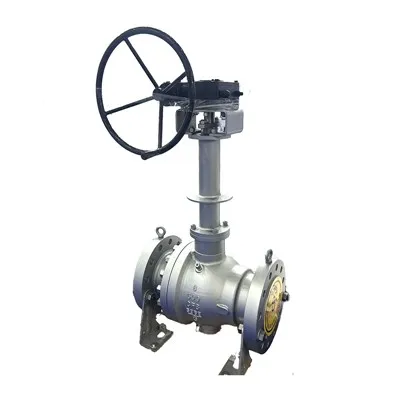
At the end of the day, the best part about globe valves is their versatility. They can go from a tiny line in a craft brewery to a massive refinery pipeline, handle molten salt in a solar plant or corrosive acid in a chemical plant, and work in residential geothermal systems too. That adaptability is why we keep selling them, and why our clients keep coming back. If you’ve got a valve problem, or just need to replace some old ones, hit us up—we’ll make sure you get the right globe valve that lasts.
Check Valve References
Valve University. (n.d.). Globe Valves: Design, Operation, and Applications. Retrieved from industry technical resources
American Petroleum Institute. (2020). Standard 600: Steel Valves for Refinery Service. API Publishing
Food and Drug Administration. (2021). Food Equipment Standards: Valve Materials and Design. FDA Regulatory Guidelines
Power Engineering Magazine. (2019). Valve Selection for High-Temperature Steam Systems. Industry Maintenance Report
Yancheng Suhao Valve Industry Co., Ltd.
We are one of the most experienced globe valve manufacturers and suppliers in China, specialized in providing high quality customized service. Please feel free to wholesale durable globe valve in stock here from our factory. Also, quotation is available.
Address: No. 33, Huashan Road, Economic Development Zone, Funing County, Jiangsu Province
E-mail: Support@suhao.net
WebSite: https://www.suhaoind.com/
