Hey everyone, it’s Jake here from your go-to 5 axis machining center supplier – let’s cut through the jargon today and talk about something that makes or breaks a lot of shops’ projects: thermal stability on a 5 axis machining center. If you’ve ever been mid-job, cranking out tight-tolerance aerospace parts or medical components, only to come back and see a 0.005” drift in your walls or bores, you know this is the stuff that kills deadlines and ruins margins. Spoiler: thermal stability isn’t just a fancy term we throw around in the conference room – it’s the difference between a part that passes first article inspection and one that gets sent back for scrap. 5 Axis Machining Center
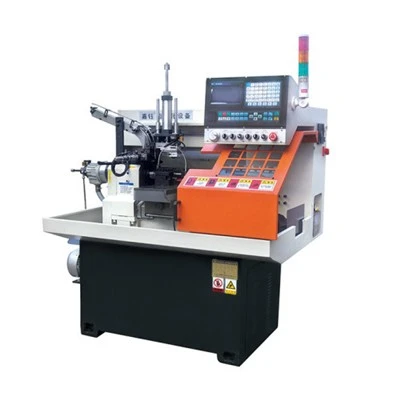
First, let’s make sure we’re on the same page about what we’re actually talking about here, no textbook definitions. When you run a 5 axis machine all day long – especially when you’re pushing it hard, doing high-feed milling, heavy roughing, or long series of operations – two big things happen: first, the motor spindles get burning hot, and second, the environment around the shop floor fluctuates. A 10°F change in your machine room overnight, or a spindle that’s been spinning at 10k RPM for 8 hours straight? That’s enough to make the machine frame stretch, the ball screws expand, and even the linear guides shift just enough to throw your part out of spec. For a 3 axis machine, this is annoying – maybe you just offset the G-code a bit. But on a 5 axis? It’s way trickier, because you’ve got two extra rotary axes (A and B, or C depending on configuration) that pivot, and their kinematics rely on every single component staying in perfect alignment. One tiny thermal shift, and suddenly your rotary axis isn’t where it’s supposed to be relative to the linear axes, and you’re chasing errors instead of hitting your tolerances.
Let’s break down the main culprits that mess with thermal stability on a 5 axis machine, because knowing the enemy is half the battle. First up is spindle heat – hands down the biggest one. A 5 axis spindle is constantly moving, so it’s got bearings, motors, and sometimes even built-in cooling lines all working overtime. If a spindle isn’t properly cooled, it can grow several thousandths of an inch during a long run, and since that’s at the business end of the tool, that error transfers directly to your part. Then there’s the machine structure itself – the cast iron frame, the linear guide rails, the ball screws for X, Y, Z, and even the rotary axes’ drive components. Cast iron is still the go-to for most good machines because it holds heat better than aluminum, but it still expands, just slower than lighter metals. Ball screws? They rotate thousands of times a minute, and the friction generates heat that makes them stretch along their length. For a ball screw that’s 6 feet long, a 1°C temperature rise can add like 0.002” – that might not sound like much, but if you’re holding ±0.001” on a critical feature, that’s a disaster. And don’t sleep on the shop environment! If you’re running a machine in a drafty old shop where temperatures jump 15°F from morning to afternoon, or you’ve got other machines blowing hot air right at your 5 axis, that’s an external heat source eating into your accuracy.
Now, how do we actually solve this stuff on the machines we build? This is where a lot of suppliers cut corners, but at our shop, we’ve spent years tweaking these details because we know how much it costs our customers when thermal issues pop up. First, spindle cooling – we don’t just run basic water lines through the spindle housing, we use closed-loop, temperature-controlled spindle cooling that adjusts in real time based on spindle load. If you’re doing a light finish pass, it runs cooler; if you’re ripping through a tough titanium part, it cranks up the cooling to keep the spindle at a consistent temp. We also use heat-sink designs on the spindle motor mount, so any extra heat that doesn’t get pulled by the cooling lines is dissipated away from the main machine frame, not into it.
Then there’s the frame itself. All our 5 axis machining centers use a heavily ribbed, double-walled cast iron base that’s not just strong, but has a uniform density across the whole structure. No thin spots where heat can get trapped, no areas that expand more than others. We also add thermal symmetry to the linear axes – so the left and right guide rails in X-axis, for example, are identical in material and cross-section, so they heat up at the same rate and expand evenly. That keeps the linear motion straight, no warping. For the ball screws? We use core cooling on all of them – that means we run cooling lines right through the center of the screw itself, so the heat inside the screw is pulled out before it can make the screw stretch. We also pre-stretch the ball screws during assembly, so once they heat up, they expand back to their original length instead of growing longer. That’s a small detail but makes a huge difference for long runs.
And the rotary axes? This is the part where a lot of cheap 5 axis machines fall apart. The A and C axes (or whatever your configuration is) have their own motors, bearings, and drive components that generate heat, and if that heat isn’t managed, the axis can tilt or shift, throwing off the kinematic calibration. We mount the rotary drive components on a separate, thermally isolated sub-frame that’s connected to the main base with thermal barriers – so the heat from the rotary axis doesn’t transfer to the linear axes or the main frame. We also calibrate the rotary axes’ thermal response during factory acceptance testing, so we can program offsets that the machine automatically applies while running, to compensate for any tiny shifts that do happen.
Wait, I should also talk about how to test if a machine actually has good thermal stability, not just what the supplier says. A lot of shops run a quick square test and call it a day, but that doesn’t cut it for 5 axis. At our facility, when we do a FAT (factory acceptance test) for every 5 axis machine we build, we run a 12-hour continuous cycle of operations that mimic what our customers actually do – heavy roughing, light finishing, 5-axis interpolated cuts, all the stuff that generates heat. Then we check the part accuracy over time, and also use a laser tracker to measure the machine’s kinematic error at every hour, to see how much drift there is. A good 5 axis machine should have less than 0.003” of total drift over 12 hours of steady running, and that’s with the machine in a room that’s only temperature-stabilized to ±2°F, not some fancy climate-controlled lab. If a supplier can’t back up their thermal stability claims with that kind of real-world testing, they’re just guessing.
Let’s talk about why this matters to you, the shop owner or machinist, not just us as builders. If you’re making parts for aerospace, medical, or defense industries, your tolerances are tight – we’re talking ±0.0005” sometimes. If your 5 axis machine has bad thermal stability, you’re either running slower than you need to, taking extra warm-up time every morning (that’s 30 minutes to an hour a day wasted!), or you’re scrapping parts because they’re out of spec. I’ve had customers come to us after buying a cheap 5 axis machine, saying they were scrapping 10% of their titanium parts because of thermal drift. After they swapped to one of our machines, that number dropped to less than 1%, and they were able to run their shifts longer, no warm-up time needed. Another customer does automotive prototype parts, and they used to have to rebuild their rotary axis every 6 months because of heat damage – now they’re going 2 years between service, just because we managed the thermal load better.
Now, common myths about thermal stability, let’s bust those real quick. First myth: “I can just turn on the machine and let it warm up for an hour before running, so thermal drift isn’t a problem.” Yeah, that works for a little while, but what if you have to run a midnight shift where the machine sits cold for 12 hours? The temperature will be different, the warm-up you did in the morning won’t match, and you get drift. Or what if you switch between a heavy roughing job and a light finishing job, so the spindle heats up and cools down mid-shift? That warm-up trick doesn’t help then. Second myth: “All 5 axis machines are the same when it comes to thermal stuff.” No way – a machine built for general purpose work vs. a machine built for high-tolerance, 24/7 production? The materials, cooling, and design are night and day. Third myth: “Thermal compensation is a crutch that fixes bad design.” Wait, no – compensation works, but if your machine drifts so much that you need constant, aggressive compensation, you’re just adding code that can cause errors if something changes. A good thermal design means you need way less compensation, because the machine is stable in the first place.
So, what should you be looking for when shopping for a 5 axis machining center, specifically around thermal stability? First, ask about spindle cooling: is it closed-loop, temperature-controlled, with core cooling? Ask about ball screws: do they have internal cooling, and are they pre-stretched? Ask about the frame: is it a uniform cast iron structure with thermal symmetry? And most importantly, ask for their FAT thermal test data – don’t just take their word for it that it’s stable. Any reputable supplier will have that data ready to show you, not buried.
At the end of the day, thermal stability is the unsung hero of a good 5 axis machine. It’s not the flashy 3D simulation or the high-speed spindle top speed – those are useless if the machine can’t hold accuracy when it’s working hard all day. We built our business on making machines that don’t make our customers deal with the headache of thermal drift, because we know that’s what keeps shops profitable, on schedule, and making parts that work. If you’re tired of scrapping parts, wasting time on warm-ups, or dealing with a machine that throws out tolerance for no reason, we’re here to chat. Whether you’re a small job shop looking to upgrade your first 5 axis machine, or a big production facility needing a reliable line of machines, we can walk you through exactly how our thermal design works, answer all your questions, and help you find the right setup for your jobs.
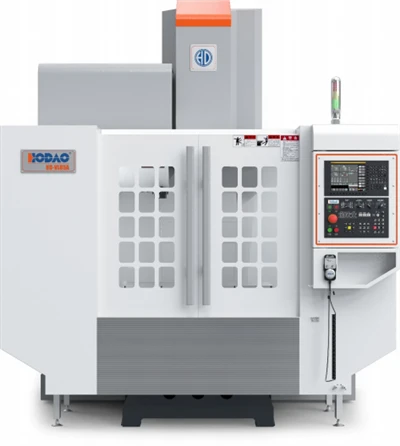
If you’re ready to stop fighting thermal stability and start making parts without headaches, reach out to us to connect and talk through your 5 axis needs. We’re here to help, no pressure, just real advice from people who build these machines day in and day out.
Profile Machine References
- Boothroyd, G., & Knight, W. A. (2006). Fundamentals of Machining and Machine Tools. CRC Press.
- Weck, M., & Brecher, C. (2013). Machine Tools: Structure and Dynamics. Wiley-VCH.
- ISO 10360-8:2017, Geometrical product specifications (GPS) – Acceptance and verification tests for coordinate measuring machines (CMM) – Part 8: CMMs with multiple simultaneous axes for measurement of surfaces.
- Smith, G. T. (2016). CNC Machining: Tooling, Programming, and Techniques. Industrial Press Inc.
Taizhou Qiyang Trading Co., Ltd.
As one of the most professional 5 axis machining center manufacturers and suppliers in China, we’re featured by quality products and good price. Please rest assured to buy bulk 5 axis machining center for sale here and get quotation from our factory. Customized orders are welcome.
Address: Zhenhai Village, Binhai Town, Wenling City, Taizhou City, Zhejiang Province
E-mail: qycncmachine@outlook.com
WebSite: https://www.qycncmachine.com/
