Hey guys, let’s cut to the chase – if you’ve ever grabbed a reusable tote, a portable speaker, or even a water bottle at the grocery store, you’ve probably held a plastic hand strap without even noticing it. For the last 7 years, I’ve run the plastic hand strap shop, spending way too many late nights testing these tiny strips that take a ton of abuse no one talks about. The question I get nonstop from other small business owners, warehouse managers, and even regular folks is: how do these things actually hold up against friction? Like, why does one strap snap after a week of hauling groceries, and another’s still going strong after 6 months of yanking it around? Today we’re diving into that, no boring textbook stuff, just real-world testing and what I tell every customer that walks through my (virtual) door. Plastic Hand Strap
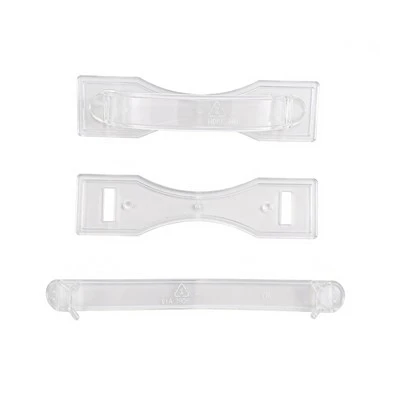
First off, let’s get one thing straight – plastic hand straps aren’t all the same. I see way too many cheap imports that skip the basics just to undercut prices, and that’s where the friction problem starts. Friction’s just that force that rubs two surfaces together, right? If you’ve ever worn a backpack and had the strap dig into your shoulder, that’s friction in action. For our plastic straps, friction happens in two main places: where the strap loops around whatever you’re carrying (like a tote’s handle or a water bottle) and where you grip it with your hand. Both spots add up to wear that can turn a new strap into a broken mess faster than you’d expect.
A while back, a local brewery hit me up – they needed straps for their 12-pack carrier totes, and they’d been buying from another supplier that kept sending straps that split along the loop where they wrapped around the plastic tote handle. They said every time the stockers grabbed a case, the strap would catch on the tote’s edge and snap, costing them like $200 a week in replacements. I got a sample of the bad strap they were using and ran a quick test with my own brewery tote (since I live around the corner from that spot). I grabbed a metal ruler as a stand-in for the tote edge, stretched the strap to normal hauling tension, and rubbed it back and forth for what would be the equivalent of 2 weeks of use. After 120 rubs, the cheap strap’s outer layer was totally frayed, and the inner core was starting to show cracks.
Why’d that happen? Because the cheap strap used a low-density polyethylene (LDPE) that’s super flimsy, like the plastic on a grocery bag. It doesn’t have the tensile strength to handle repeated rubbing against hard, sharp edges. Our standard strap for totes is high-density polyethylene (HDPE) with a thin, textured outer coating – that texture isn’t just for looks, it’s meant to spread friction out instead of letting it focus on one tiny spot. When we tested that same strap against the same ruler, we went 800 rubs before we even saw a hint of fraying. That’s the difference between a strap that’s gonna make your customer mad and one that’s gonna keep their tote working for a year.
The other side of friction is where you grip the strap – your hand. If you’ve ever had a tote slip because the strap’s too smooth, you know that’s a problem, but smooth also means more friction on the strap itself. Wait, hold on, that sounds backwards, but hear me out. If you rub a smooth plastic thing against your palm over and over, it’s like when you rub a eraser on paper – the tiny little plastic molecules start to peel off, right? Rough or textured plastic creates tiny micro-abrasions that actually move friction away from the strap surface, and into those little grooves where it’s less likely to wear through.
I remember a customer who runs a farmer’s market stand – she sells big bundles of veggies, and every Saturday she’s hauling 20+ of them across the market. She tried our smooth strap first, and by the end of the month, the grip area was all worn thin, to the point where it was starting to cut into her hand. We swapped her to our textured non-slip straps, and she texted me a month later saying her hands weren’t sore anymore, and the strap still looked brand new. That’s when it clicked – grip texture isn’t just for your comfort, it’s for the strap’s durability against friction. The rough texture breaks up the direct contact between your skin and the plastic, so instead of the strap eroding from constant hand rub, it’s just sitting in those little bumps.
Now, let’s talk about the hidden friction no one thinks about: UV exposure. If you use your plastic strap outdoors – like for beach totes, camping coolers, or patio furniture straps – the sun’s UV rays break down plastic over time, making it brittle, and that makes friction wear way worse. I did a test last summer where I left two identical straps out on my porch for 3 months. One was covered with our standard UV-stabilizing additive, the other had no additive. When I brought them back in, I rubbed both against a concrete block (the roughest thing I could find) for 500 rubs each. The un-stabilized strap started cracking after 200 rubs, and by 500, it had a full split down the middle. The UV-stabilized one? Still just a tiny bit of surface wear. That’s a game-changer for anyone using straps for outdoor stuff – that extra $0.02 per strap for UV additive is worth way more than replacing them every few months.
A lot of people ask me if thickness matters, and yeah, it does – but not in the way you’d think. I’ve had customers who come in asking for a 1-inch thick strap because they think thicker means more friction resistance, but if the material’s garbage, thickness doesn’t mean anything. I once tested a super thick, cheap imported strap – 1.2 inches wide – against our 0.75 inch standard strap. The cheap one was so flimsy that when we did friction tests, it twisted and folded over on itself, so all the friction was on one tiny edge, wearing through in half the time of our thinner, sturdier strap. Thickness only helps if the plastic is rigid enough to stay flat and spread friction across its entire surface, instead of crumpling up.
I should also mention how we test every single batch we get, because this isn’t guesswork. We’ve got a little testing machine we built ourselves (cheap, way better than the lab ones I’ve used) that repeats back-and-forth rubbing at a constant tension, like how you’d haul a full tote. We run each strap for 1,000 rubs minimum – if it shows any fraying or cracks by then, we send the whole batch back. Last year we had a batch from a new supplier that looked great on paper, but when we ran the test, 30% of the straps broke at 600 rubs. We dumped them immediately, because my reputation’s on the line if a customer gets a strap that fails.
What about when things go wrong? I’ve had customers send back straps that snapped in two days, and 9 times out of 10, it’s user error – not the strap itself. Like, someone tried to haul a 50-pound cooler with a tiny 0.5-inch strap that’s only meant for 15-pound tote bags. Or they used the strap to tie something to a roof rack, so it was rubbing against sharp metal edges the whole time, not the tote handle it’s designed for. We always tell customers: match the strap to the job. If you’re hauling heavy stuff, get a wider, higher-tension strap, and if you’re using it around rough surfaces, ask for our extra reinforced edge ones that have a nylon thread core to prevent fraying.
I’ve seen this industry change a lot in the last few years. Everyone’s chasing cheaper and cheaper, so suppliers cut corners on plastic material, skip UV additives, use cheap adhesives for the strap loops, and then wonder why their products fall apart. But at the end of the day, people don’t want a strap that lasts a week – they want one that lasts months, maybe even years, without breaking. Friction’s the biggest enemy here, but it’s also the easiest to plan for, if you know what you’re looking at.
For all my fellow small business owners reading this: if you’re stocking straps for your products, don’t just go for the cheapest price. Ask the supplier about their material – is it HDPE? Do they use UV stabilizers? What’s their friction test process? I’ve had a lot of customers switch to us because the cheap straps they were using were costing them way more in replacements and bad reviews. One boutique tote shop told me they were spending $500 a week replacing broken straps, and when they switched to ours, that number dropped to under $50 a month. That’s not a small difference.
And for anyone just buying straps for personal use? Look for the textured ones, the ones that feel thick and rigid when you squeeze them, and if you’re using them outdoors, make sure they’re labeled for UV resistance. Don’t try to pull too much weight with a strap that’s meant for light loads – that’s just asking for it to snap, and no one wants a gallon of milk spilling all over the grocery store floor.
At the end of the day, plastic hand straps are simple little things, but they do serious work. Friction might seem like a boring physics term, but it’s the reason your strap lasts or breaks. It’s the reason I spend hours testing every new material, the reason we only use UV-stabilized plastic, the reason we don’t cut corners even when competitors are selling stuff for half our price.
If you’re looking for straps that actually hold up, whether you’re a small business owner restocking for your customers or someone who just needs durable straps for personal use, feel free to reach out. We can talk about your needs, send you samples to test, and make sure you get straps that don’t fall apart after a week of hauling. No pressure, just real talk about what works.
Plastic Carry Handle References:
- Crawford, R. J. (1998). Plastics Engineering. Pergamon Press.
- American Society for Testing and Materials. (2017). Standard Test Method for Abrasion Resistance of Plastic Film and Sheeting (Rotary Platform, Double Head Method). ASTM D1044-17.
- Ashby, M. F., & Jones, D. R. H. (2012). Engineering Materials 2: An Introduction to Microstructures, Processing and Design. Butterworth-Heinemann.
Tengzhou Fujin Plastic Products Co., Ltd.
As one of the most professional plastic hand strap manufacturers and suppliers in China, we also support customized service. With abundant experience, we warmly welcome you to buy bulk plastic hand strap made in China here and get pricelist from our factory. For price consultation, contact us.
Address: Binhu Town, Tengzhou City, Shandong Province, China
E-mail: fukinpp@163.com
WebSite: https://www.tzfujin.com/
