If you’ve ever worked in biotech labs, pharmaceutical processing, water purification, or food and beverage production, chances are you’ve had to choose between two core tools in ultrafiltration (UF): centrifugal UF devices and UF tubes. As a supplier that’s specialized in both for over a decade, I’ve heard every question under the sun about which fits which application best, and more often than not, people mix up these two entirely different tools—blaming low yield, inconsistent results, or unplanned downtime on the wrong choice between them. Let’s cut through the confusion, break down the real differences, and explain why picking the right one doesn’t just make your work easier—it makes it more reliable, less costly, and faster. Centrifugal UF Device / Tube
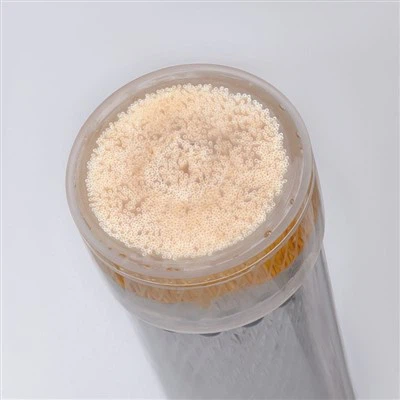
First, I want to be clear: centrifugal UF devices and UF tubes are not just two names for the same thing. They’re designed for separate jobs, built with distinct mechanics, and deliver different performance outcomes. I’ve seen new lab managers grab a UF tube for small-scale protein concentration in a centrifuge, only to end up with ruined samples and wasted time, and I’ve also seen manufacturing line supervisors rely on a centrifugal UF device for continuous beer clarification, wondering why their throughput is too low for their production run. That’s the mistake: using the wrong tool for the job, even if it shares the same UF label.
Let’s start with how each of these works, because that’s where all the differences start. Ultrafiltration, at its core, is a pressure-driven process that uses a semipermeable membrane to separate molecules based on size: small particles, solvents, and salts pass through the membrane (the permeate), while larger target molecules (like proteins, antibodies, or bacteria) get retained (the retentate). Now, centrifugal UF leans on centrifugal force to drive that pressure, while UF tubes use either gravity or external pump pressure, depending on the type. That foundational difference is the root of everything else.
Centrifugal UF devices are compact, self-contained units meant for small-volume, batch processing—think volumes from 1 mL up to, say, 500 mL, max. Most of them are disposable, which is a huge benefit for avoiding cross-contamination between samples, especially in sensitive work like cell culture or clinical lab testing. They fit directly into standard benchtop centrifuges, so you don’t need extra external pumps or plumbing. Inside, there’s a small cassette or hollow fiber membrane stack, sealed inside a plastic housing, that’s spun at high speeds (usually 3,000 to 10,000 RPM, depending on the model). That spinning creates a powerful radial force that pushes the smaller components of your sample through the membrane pores, leaving the concentrated target in the remaining retentate inside the device. It’s simple: load your sample, spin, and collect the retentate when done.
UF tubes, on the other hand, come in two main types—gravity-driven and pump-driven, both built for a wider range of volumes, from 10 mL up to hundreds of liters. The small, lab-scale gravity UF tubes you might see in a research lab are often called “dead-end” UF tubes: they have an open top to add sample, a bottom with a semipermeable membrane, and the permeate drips out the bottom over time as gravity pulls it through. Larger-scale pump-driven UF tubes (often referred to as “tubular UF modules” in industrial settings) are long, hollow plastic tubes lined with a membrane along the inner wall, and they’re plumbed into a closed system that uses an external pump to push the sample through the tube. Unlike centrifugal UF, there’s no spinning here—pressure comes from the pump, and permeate is pulled through the membrane wall, while retentate flows out the other end of the tube.
Now, let’s get into the practical differences that matter to you, whether you’re running a 10-person research lab or a 100,000 L/day water purification facility. The first big one is throughput and scale. Centrifugal UF devices are for small volumes—they’re not built for mass production. If you need to process 10 L of antibody for a clinical trial, spinning 20 mL batches in a centrifuge all day would take you weeks, and you’d use thousands of centrifugal devices for a single run, which gets expensive fast. That’s where UF tubes shine: pump-driven tubular UF modules can process hundreds of liters per hour, making them ideal for industrial-scale biomanufacturing, dairy processing, or municipal water filtration. Even the smallest gravity-driven UF tubes top out at around 1 L per run, which is still 10x the volume of a typical centrifugal UF device, but they’re slower because of gravity.
Next, sample integrity and membrane fouling. This is a point I can’t stress enough, because it’s where a lot of people run into avoidable problems. Centrifugal UF spins the sample, which creates shear force—wait, actually, wait: for molecules like proteins or antibodies, gentle shear force can be good, because it prevents the formation of a thick “gel layer” on the membrane surface that clogs pores (that’s called fouling). But too much shear can damage fragile molecules, like sensitive enzymes or living cell structures. Most high-quality centrifugal UF devices are calibrated to keep shear levels low enough for most lab samples, but if you’re spinning at the upper end of their speed range, you risk denaturing your target protein. UF tubes, on the other hand, have very low shear in their large, flow channels—especially tubular modules. The sample flows along the membrane, not violently spinning, so fragile molecules stay intact. But because the flow is constant, fouling can be a problem if you’re not using a crossflow setup (most industrial tubular UF systems are crossflow, meaning retentate recirculates to keep the membrane surface clear, while gravity dead-end tubes have no crossflow, so fouling builds up quickly).
That leads me to membrane options and versatility. Centrifugal UF devices almost always use flat-sheet or small hollow fiber membranes, because they fit into their compact housing. While the membrane materials are high-quality (PES, PVDF, cellulose), the pore sizes are limited to what works for small volumes—usually 1 kDa to 100 kDa, which covers most common lab separations. They’re also almost always disposable, so you don’t have to clean them between uses, which is perfect for sensitive or high-purity work where cross-contamination is a risk. UF tubes, especially the industrial tubular ones, come in a much wider range of membrane types and pore sizes: from 1 kDa all the way up to 0.1 μm for microfiltration applications too. They’re reusable, too—you can clean and sanitize them with caustic solutions or autoclaving, which cuts down on long-term waste and cost for large-scale operations. The small gravity-driven UF tubes are sometimes disposable, but they have higher pore sizes usually, meant for rough separations like removing particulates, not fine molecular separations.
Cost is another big differentiator, and it breaks down depending on your scale. For small, one-off lab runs—say, concentrating a protein sample for a western blot or a small enzyme assay—centrifugal UF devices are cheaper. A single centrifugal device costs $5 to $20, and you only need a few for a small run, no extra equipment required. If you tried to use a UF tube for that, you’d have to buy a reusable tube and a small peristaltic pump, which would cost $100 to $500 upfront, just for a 1 mL sample run. But when you scale up, the math flips. If you need to process 100 L of sample for a pre-clinical trial, disposable centrifugal devices would cost you $5,000 to $10,000, while a tubular UF system for that scale would cost a few thousand dollars total, and last for years if you maintain it. Even the disposable, small-scale centrifugal UF devices add up over time—for a lab running 100 sample runs a month, that’s $500 to $2,000 a month in disposables, while a reusable UF tube setup would cost a fraction of that after the first few months.
Then there’s ease of use and consistency. Centrifugal UF devices are super simple: add sample, put in centrifuge, spin, collect. That’s why they’re so popular in labs where people are running multiple parallel samples. But consistency can vary a lot between centrifuges—different models have different RPM accuracy, which affects how much pressure is applied, leading to inconsistent concentration factors between runs. UF tubes, especially the pump-driven tubular ones, let you control pressure, flow rate, and crossflow rate precisely with a controller, so every run is identical. Gravity-driven UF tubes are less consistent because they rely on sample viscosity and temperature, but pump-driven ones eliminate that variability.
I’ve seen this play out firsthand with a customer of mine last year: a small biotech startup that was developing a monoclonal antibody. They were using centrifugal UF devices for their small test runs, and once they scaled up to 10 L runs, they were struggling with two things: centrifugal device costs were eating 15% of their monthly R&D budget, and they were getting inconsistent yield because each centrifuge’s RPM was slightly off. I suggested they switch to a small, pump-driven tubular UF module. They did, and within two months, their yield was 12% higher, their monthly UF costs dropped by 60%, and they didn’t have to spend hours loading and unloading hundreds of centrifugal devices every week. That’s the kind of practical difference that doesn’t make it into textbook definitions, but makes all the difference for a business.
But that doesn’t mean centrifugal UF devices are obsolete. They’re perfect for their niche: small, quick runs where disposable, no-setup convenience is key. For example, a clinical lab processing patient samples for drug testing will always reach for a centrifugal UF device, because they need to avoid cross-contamination between samples, and they only need to process 1 to 5 mL per sample. You’d never use a centrifugal UF device for a municipal water treatment plant processing 50,000 L a day of drinking water, though—tubular UF tubes are the only practical option there.
Common mistakes I see customers make: buying centrifugal UF devices because they’re cheaper upfront for a scale that needs tubular modules, leading to skyrocketing costs and slow throughput; or buying a UF tube for a 1 mL lab run, wasting money on extra equipment and set up. The key is to ask yourself three questions before choosing: 1) What volume do I need to process? 2) Do I need disposable (no cross-contamination risk) or reusable? 3) Do I need precise control over pressure and flow, or just a quick, low-effort batch run?
At our company, we work with everyone from high school science labs to Fortune 500 biomanufacturers, and that’s what we guide every customer through. We don’t push one product over the other—we help them pick the tool that fits their exact needs, whether that’s a centrifugal UF device for a small research project or a tubular UF tube for a large production run. We’ve seen too many teams waste time, money, and samples by picking the wrong one, and our goal is to make that confusion go away.

If you’re tired of sorting through conflicting reviews, or you’ve had issues with your current UF setup not meeting your throughput or purity goals, I’d encourage you to reach out. We can walk through your specific application, volume, and budget, and help you pick the right centrifugal UF device or UF tube for your work, no sales pitch, no pushy upsells, just practical advice from people who work with these tools every day. You can connect with our team directly to discuss your needs, and we’ll be ready to answer any technical questions you have about membrane types, scale, fouling prevention, and cost.
Tangential Flow Filtration Devices References
Cheryan, M. (1998). Ultrafiltration and Microfiltration Handbook. CRC Press.
Geciova, M., Bousova, M., & Held, A. (2002). Shear effects on proteins during membrane filtration. Journal of Membrane Science, 203(1-2), 111-123.
Zeman, L. J., & Zydney, A. L. (1996). Microfiltration and Ultrafiltration: Principles and Applications. CRC Press.
Hangzhou Guidling Technology Co., Ltd.
As one of the leading centrifugal uf device / tube manufacturers and suppliers in China, we also support customized service. We warmly welcome you to wholesale high quality centrifugal uf device / tube in stock here from our factory. For quotation, contact us now.
Address: No.795, 18th Street, Qiantang New District, Hangzhou City, Zhejiang Province, China
E-mail: export1@guidling.net
WebSite: https://www.guidlingfiltration.com/
