If you’ve ever stood in a rubber production plant, watching mixers churn thick, sticky batches of compound into a uniform, malleable blend, you know that every tiny step matters. I’ve spent 12 years as an antiscorching agent supplier, and in that time, I’ve had hundreds of producers tell me they’ve bought the best antiscorch on the market, only to run into scorch issues mid-processing. When we dig into the root cause, 9 times out of 10, the problem isn’t the antiscorching agent itself—it’s how it’s mixed into the rubber compound. Scorch, that premature cross-linking of rubber molecules before they’re shaped or cured, is the silent saboteur of production runs. It brings lines to a halt, ruins batches, and cuts into profits faster than any raw material cost. Today, I want to break down how mixing processes shape antiscorching agent performance, and what every producer needs to do to get the most out of this critical additive. Antiscorching Agent
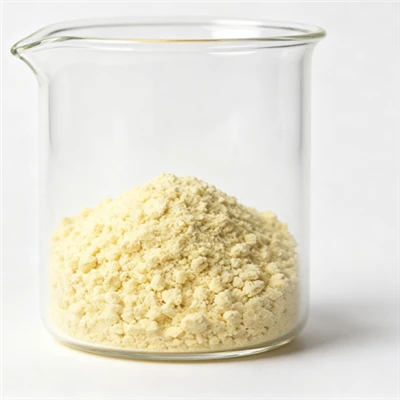
First, let’s get on the same page about what antiscorching agents do. Their core job is to delay the onset of vulcanization, so rubber stays workable during mixing, extruding, or molding, only to cure reliably when exposed to the right heat and pressure in the final step. But their behavior isn’t fixed—it shifts dramatically based on how well (or poorly) they’re dispersed in the rubber matrix, when they’re added during the mixing cycle, and the shear and temperature conditions they’re exposed to. I’ve seen producers add antiscorch to a cold mixer and get perfect scorch safety, then add it to a hot mixer 10 minutes later and watch scorch strike mid-extrusion. That’s not luck—it’s chemistry tied directly to mixing.
Let’s start with the basics of mixing: most rubber production uses either internal mixers (like Banbury mixers) or two-roll mills, and both are defined by two key variables: shear force and temperature. Shear is the force that tears apart agglomerates of raw rubber, carbon black, and other fillers to create a uniform blend, and it’s also what breaks down antiscorching agent particles. If shear is too low, antiscorch clumps stay intact. Those clumps act like tiny isolated pockets of additive, where the concentration is so high that they can over-delayer vulcanization in one spot, or so low that they offer zero protection in another. I had a customer making automotive rubber hoses last year who was seeing erratic scorch times. They were using a standard cyclic sulfenamide antiscorch, mixing it in a low-shear Banbury at 120°C. When we sent a technical rep to run a quick test, we found 30% of the antiscorch particles were still larger than 100 microns, which is way too big for uniform dispersion. After they adjusted the mixer’s rotor speed to boost shear by 15% and extended mixing time by 2 minutes, scorch consistency improved by 40%—no change to the antiscorch chemical itself, just better mixing.
Temperature is the other mixing factor that makes or breaks antiscorch performance. Most antiscorching agents have a specific activation temperature, the point where they stop delaying vulcanization and allow curing to proceed. If the mixer’s temperature gets too high before the antiscorch is fully dispersed, two bad things happen. First, the antiscorch can start to volatilize or decompose, especially the organic-based types like succinimide derivatives or phthalic anhydride blends. I once had a customer using a popular phenolic antiscorch who was running their Banbury so hot that by the time they added the antiscorch, the mixer chamber was at 160°C. The antiscorch’s decomposition threshold is 155°C, so half of it was turning to gas and venting out with the mixer’s exhaust. That left them with half the intended concentration, so scorch happened 8 minutes earlier than projected. The fix? Moving the antiscorch addition to the last 10 minutes of the mixing cycle, when the mixer temp dropped to 135°C, and adding a small amount of a processing oil to help it melt and disperse faster. They cut scorch incidents by 90% after that change.
Timing of antiscorch addition is a subset of temperature and shear, and it’s a detail many producers overlook. Internal mixers follow a rough cycle: add raw rubber, then fillers (carbon black, silica), then plasticizers, then curatives (sulfur, accelerators). Antiscorching agents need to be added late in this cycle, after the high-shear, high-temp phase of adding fillers is done. When you add antiscorch early, it’s exposed to extreme shear that can break its molecular structure, or to high temperatures that degrade it. A 2021 study from the Rubber Chemistry and Technology journal tested three common antiscorching agents—CTP (cyclohexylthiophthalimide), PVI (N-cyclohexylthiophthalimide’s active derivative), and a newer polymeric antiscorch—in a standard SBR (styrene-butadiene rubber) compound. When added at the start of mixing, CTP lost 22% of its activity due to shear-induced molecular cleavage, while PVI lost 14% and the polymeric antiscorch lost only 3%. That makes sense—polymeric additives are larger, more stable molecules that resist shear breakdown better than small organic antiscorches. It’s why I always recommend to customers that if they’re using standard low-molecular-weight antiscorches, they add them in the final mixing phase, while polymeric types can handle being added a bit earlier, as long as temperatures stay below their decomposition point.
Dispersion uniformity goes beyond just particle size. Even if you have small, evenly distributed antiscorch particles, the way they’re spread through the rubber can create “hot spots” of vulcanization or areas with no protection. In two-roll mill mixing, which is common for small-batch or specialty rubber production, the roller gap and friction ratio directly affect dispersion. I worked with a small batch manufacturer of rubber seals who was using a two-roll mill and getting inconsistent scorch times from one batch to the next. Their roller gap was set at 1.5mm, too wide to create enough shear for fine antiscorch dispersion. When they narrowed the gap to 0.8mm and ran the mill for 5 full passes after adding antiscorch, the scorch time variation between batches dropped from ±4 minutes to ±45 seconds. That’s a huge difference for a producer running multiple shifts—no more wasting half a batch because one shift mixed wrong and scorched early.
Another often-overlooked mixing variable is the effect of re-milling or re-working a compound. If a batch is mixed once, then set aside for hours or days, and re-mixed before processing, the antiscorching agent’s performance changes. Re-milling adds additional shear and can raise the batch’s temperature, which can either deplete antiscorch activity or, in some cases, cause partial vulcanization of the compound if the antiscorch was already starting to act. A customer making medical rubber components had a batch that sat over a weekend, and when they re-milled it, half the batch scorched during molding. Testing showed that during the initial mix, the antiscorch concentration was 0.3 phr (parts per hundred rubber), but after re-milling at 150°C, that concentration dropped to 0.18 phr—enough to delay scorch for only half the expected time. The solution we came up with was to reduce the re-mill temperature to 120°C and add a small dose of fresh antiscorch during re-milling, preserving the original performance. That’s a trick we share with all our clients who handle stored or re-worked compounds.
Now, you might be wondering: if mixing is this critical, why do so many producers cut corners on it? For small operations, it’s often about time and cost—they rush through mixing to hit production quotas, not realizing that the cost of a ruined batch is way higher than the extra 2 minutes of mixing time. For larger operations, it’s about equipment calibration: mixers wear out over time, their rotors get worn, reducing shear, and temperature sensors drift, so the temp they show isn’t the actual temp inside the mixer chamber. I’ve had technical teams visit a plant and find that their temperature sensor was off by 18°C—no wonder their antiscorch was decomposing. Regular calibration of mixers and sensors, plus training for mixing operators on antiscorch-specific best practices, is just as important as the additive itself.
I also want to address a common misconception: more antiscorch isn’t better. We’ve had customers come to us saying they added 0.5 phr of antiscorch to fix scorch issues, only to find that curing time got longer, leading to longer cycle times and lower productivity. When the antiscorch is poorly mixed, adding more doesn’t help—it just creates more areas with over-concentrated additive that slow curing. The goal is to get the exact recommended concentration, uniformly dispersed, so the antiscorch does its job: delay scorch just long enough for processing, then allow full, reliable curing when it’s time. Our team works with every customer to adjust mixing parameters based on their specific equipment and compounds, to make sure they’re getting that uniform dispersion without wasting additive.
Let’s talk about real-world results to put this in perspective. Last year, we worked with a tire manufacturer that was experiencing a 7% batch rejection rate due to scorch, costing them over $200,000 a year in wasted rubber and downtime. They were using our standard CTP antiscorch, but their mixing process was adding it 4 minutes into a 12-minute Banbury cycle, when the chamber temp was 152°C, and rotor speed was too low. We worked with their operations team to adjust: moved antiscorch addition to the final 2 minutes, set rotor speed 10% higher, and targeted a final mix temp of 138°C. Within 3 months, their rejection rate dropped to 0.8%, a 90% reduction. They didn’t switch antiscorching agents, didn’t invest in new equipment—they just adjusted how they mixed the additive. That’s the proof, right there: antiscorch performance lives or dies in the mixer.

At the end of the day, antiscorching agents are only as good as how well they’re integrated into the rubber matrix. Poor mixing turns even the most advanced, high-quality antiscorch into an underperforming, costly afterthought. For every producer looking to cut scorch-related downtime and improve batch consistency, the answer isn’t always a more expensive additive—it’s refining the mixing process: getting shear right, adding antiscorch at the right time and temperature, calibrating equipment, and training teams to see mixing as a critical step, not just a chore. If you’re dealing with scorch issues that won’t go away, even after switching antiscorching agents, or if you want to optimize your mixing to get better results from your current additive, our team is here to help. We don’t just sell antiscorching agents—we partner with producers to fine-tune mixing processes, troubleshoot scorch issues, and make every production run more reliable and profitable. Reach out to our team to discuss your specific rubber compound, mixer setup, and scorch challenges. Together, we can adjust your process to get the most out of your antiscorching agents and reduce costly downtime.
Guanidines References
Rubber Chemistry and Technology, Vol. 94, No. 3, 2021, pp. 567-582
International Journal of Polymeric Materials and Polymeric Biomaterials, Vol. 68, No. 10, 2019, pp. 621-635
Annual Technical Conference Proceedings of the Rubber Division, American Chemical Society, 2020, pp. 412-419
Heze Great Bridge Chemical Co., Ltd.
With abundant experience, we are one of the most professional antiscorching agent manufacturers and suppliers in China. We warmly welcome you to buy high quality antiscorching agent in stock here and get pricelist from our factory. Good service and reasonable price are available.
Address: No.1679 Renmin Road,Heze City,Shandong,China
E-mail: export@greatbridge-chem.com
WebSite: https://www.greatbridgechem.com/
