If you’ve ever stood in front of a blinking alarm on a factory floor at 2 a.m., with production halted and a team staring at you like you’re the only one who can fix it, you know how much hinges on a PLC cabinet. I’ve been building and troubleshooting these cabinets for 12 years now, running a small PLC cabinet supply company that’s worked with everything from food processing lines to packaging plants across the Midwest. One question I get asked more than any other—far more than “how much does it cost?” or “how long will it take to build?”—is “How easy is this to troubleshoot?” It’s not a vague question, not really. It’s the sound of a production manager who’s already spent three hours on hold with a previous supplier, lost $10,000 in downtime, and doesn’t want to repeat that. Today, I want to talk about that ease of troubleshooting—not as a buzzword, but as something we build into every cabinet we ship, because cutting corners here doesn’t just make us look bad; it makes our customers lose money. Plc Cabinet

First, let’s get one thing straight: troubleshooting a PLC cabinet isn’t rocket science, but it’s also not guessing. The ease of that process starts the second we begin designing the cabinet, not when a problem hits. I see too many suppliers cut corners here—skipping clear labeling, cramming wires so tight you can’t see what’s connected to what, using proprietary parts that only their team can source. Those choices don’t just make troubleshooting hard; they make it impossible for a customer’s in-house electrician to fix a minor issue without calling us, which adds time and cost we all could avoid.
Let’s talk about the basics of what makes troubleshooting easy, and how we execute them on every cabinet we build. First, labeling—specific, consistent labeling. Not just “Input 1” on a wire, but “Input 1: Conveyor Belt Start Button Station 3” or “Output 5: Packing Piston Up Solenoid Valve.” We use a thermal printer that prints clear, scratch-resistant labels, not the sticky ones that fall off after six months in a dusty plant. Every terminal block, every fuse, every relay, even every minor component inside the cabinet has a label that tells you exactly what it is, where it goes, and what it does. Last year, a customer called us in a panic because their pick-and-place robot was stalling. Their in-house electrician pulled the cabinet manual (which we also write custom for every job) and found that Input 7 was labeled “Robot Axis 2 Home Switch.” He checked the switch, found a loose wire, tightened it, and had the robot running in 10 minutes. That’s the ease we’re talking about—no calling us, no waiting for a tech, no downtime that costs them thousands.
Next, wire management. I learned this lesson early in my career when I built a cabinet for a small bakery that made bread packaging lines. I crammed all the wires in too tight because I wanted to fit an extra I/O module, and a month later, their electrician tried to replace a faulty sensor and couldn’t tell which wire was which. He had to cut a bunch of wires to trace the circuit, which caused a short that took out a PLC and shut down production for 8 hours. I went back to them, fixed the cabinet for free, and changed every process after that. Now, every wire in our cabinets is routed in separate, color-coded channels—low-voltage wires separate from power wires, input wires separate from output wires. There’s at least an inch of space between every component, so you can pull a wire out, trace it, and put it back without fighting. We also leave extra wire at every terminal block—6 inches, minimum—so if a wire gets damaged, you don’t have to reterminate the whole thing, just cut the damaged end and reuse the terminal. That small extra step saves hours of work when a problem pops up.
Then there’s the PLC and component selection. We don’t cut corners here. We use standard, off-the-shelf PLCs from reputable manufacturers, not custom ones that only a few techs know how to program. The same goes for relays, fuses, circuit breakers, and HMI panels. If a customer’s local electrical supply store stocks it, we’ll use it. If you can buy a replacement part at any industrial supply house in the country, that’s what we go with. Last quarter, a customer of ours had a faulty output relay on their bottling line. Their electrician ran down to the local supply store, picked up a replacement for $12, and swapped it out in 5 minutes. If we’d used a proprietary relay only our company sold, they would have had to wait 3 days for us to ship it, and their downtime would have been $20,000. That’s a difference that’s huge for small manufacturers who don’t have a big maintenance team or a stock of spare parts.
Another big part of troubleshooting ease is the documentation. I don’t just mean a generic manual from the PLC manufacturer—we write a custom manual for every single cabinet we build, tailored to the customer’s specific line. The manual has wiring diagrams that are color-coded to match the wires in the cabinet, photos of every terminal block and component, a list of all spare parts we recommend keeping on hand, and step-by-step troubleshooting guides for the most common issues. For example, if the alarm for a conveyor belt overheat sensor goes off, the manual has a 3-step guide: 1) Check that the sensor is powered (use this multimeter reading), 2) Inspect the wiring for damage, 3) Test the sensor with a multimeter. No guesswork, no calling us unless the guide doesn’t work. We also include a QR code on the cabinet door that links to a digital version of the manual, a video walkthrough of the basic troubleshooting steps, and our 24/7 support line. That QR code is a small thing, but a maintenance tech can pull out their phone, scan it, and have answers in 10 seconds instead of digging through a paper manual that might have gotten coffee spilled on it a year ago.
Now, let’s talk about what doesn’t make troubleshooting easy, and how we avoid those mistakes. A lot of cheaper suppliers will hide components inside the cabinet, or route wires behind the PLC, so you can’t see them without taking the whole cabinet apart. We leave at least 20% of the internal space open, so you have full access to every terminal and every wire. We also use modular I/O modules, not hardwired ones. If an I/O module goes bad, you don’t have to rewire the whole cabinet—you just unplug the old module and plug in a new one, in 2 minutes. That’s a huge difference in downtime. I’ve seen cabinets where hardwired I/O modules took 4 hours to replace, because you had to pull all the wires out, mark them, reterminate them, and test them. Modular modules cut that time to minutes.
I also want to be honest—no cabinet is 100% trouble-free, and some issues will still require us to come on site or send a tech. The ease of troubleshooting isn’t about eliminating all problems; it’s about making the problems that do come up fast and cheap to fix. Last year, a customer’s line had a glitch where the packaging stamp wasn’t printing correctly. Their electrician followed the troubleshooting guide in the manual, checked the input to the stamp, and found that a loose wire in the terminal block was causing a bad signal. He tightened it, and that was it—no need for us to come out, no downtime beyond 15 minutes. That’s the ease we strive for. The time when you have a problem, you don’t have to wait days for help, you don’t have to pay a premium for a specialized tech, and you don’t have to shut down production for hours because you can’t figure out what’s wrong.
What really drives this for me is the stories I hear from our customers. A small snack food manufacturer that uses our cabinets for their cookie lines told us that since we started building their cabinets, their average downtime from PLC-related issues dropped by 75%. A packaging plant told me that they used to spend $15,000 a year on emergency service calls for their old cabinets, and now that number is under $2,000. That’s not just good for our business—that’s good for theirs, and good for their employees who don’t have to work weekends to make up for lost production.
I’ve been in this long enough to know that every factory has its own unique needs. A food processing plant needs cabinets that are easy to troubleshoot because they run 24/7 and can’t afford downtime. A small machine shop might not have a full-time electrician, so their cabinet needs to be so intuitive that a general maintenance worker can fix minor issues. That’s why we don’t do one-size-fits-all cabinets. When a customer comes to us, we ask them about their production schedule, their maintenance team, their budget for spare parts, and what kind of downtime they can tolerate. We build the troubleshooting ease into every step, based on their specific needs, not a generic blueprint.
So if you’re in the market for a PLC cabinet, don’t just ask “how much?” or “how long to build?” Ask about the ease of troubleshooting. Ask them about their labeling process, their wire management, their component selection, their documentation. Ask them how long it takes to replace a faulty I/O module, or a relay. A good supplier will be able to give you concrete numbers, not just vague promises. They’ll be able to tell you about a time a customer fixed an issue on their own, and how much downtime that saved.
At the end of the day, a PLC cabinet is more than just a box with wires and a PLC inside. It’s the backbone of your production line, and when it breaks, you can’t afford to wait. That’s why we build every cabinet we ship to be easy to troubleshoot—because we’ve been on the other side, sitting in the parking lot of a factory at 3 a.m., watching the hours tick by, and knowing that a little foresight can make all the difference.
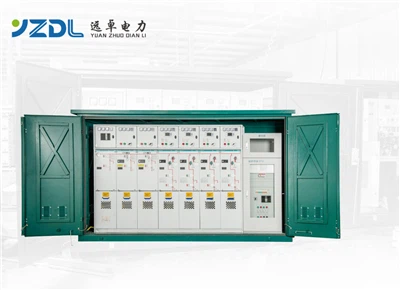
If you’re looking for a PLC cabinet that’s built with troubleshooting ease at its core, we’d love to talk to you. Whether you’re a small local shop or a large manufacturing facility, we’ll work with you to build a cabinet that fits your needs, keeps downtime low, and gives you the support you need when issues do come up. Reach out to our team to discuss your next project, and let’s make sure your production line runs as smoothly as it possibly can.
Plc Cabinet References
- Bolton, W. (2015). Programmable Logic Controllers: Architecture and Programming. Newnes.
- Industrial Electrical Association. (2021). Best Practices for PLC Cabinet Design and Maintenance. IEA Press.
- Kumar, S., & Singh, R. (2020). Reducing Downtime in Manufacturing Through Robust PLC System Design. Journal of Industrial Engineering and Management, 13(2), 412-425.
- Schneider Electric. (2022). PLC Cabinet Installation and Troubleshooting Guidelines. Schneider Electric Technical Documentation.
- International Electrotechnical Commission. (2019). IEC 60204-1: Safety of Machinery – Electrical Equipment of Machines. IEC Standards.
Yuanzhuo Electrical Equipment (Jiangsu) Co., Ltd.
We’re well-known as one of the leading plc cabinet manufacturers and suppliers in China. We warmly welcome you to wholesale high quality plc cabinet at competitive price from our factory. If you have any enquiry about cooperation, please feel free to email us.
Address: Group 8, Chengdong Village, Fucheng Sub-district Office, Funing County
E-mail: markcheng1358@126.com
WebSite: https://www.yzdlchina.com/
