If you’ve ever wrapped a leftover sandwich for a road trip, lined a baking sheet to cut down on cleanup, or covered a bowl of leftovers in the fridge to keep odors out, you’ve probably reached for aluminum foil paper without giving it much thought. As someone who’s been supplying aluminum foil paper for years—talking to bakers, caterers, and small business owners every day—I’ve found most people assume it’s a modern invention, something that popped up mid-20th century to make kitchen life easier. But the story of this thin, shiny sheet is way weirder and more layered than you’d guess. Let’s dive in. Aluminum Foil Paper
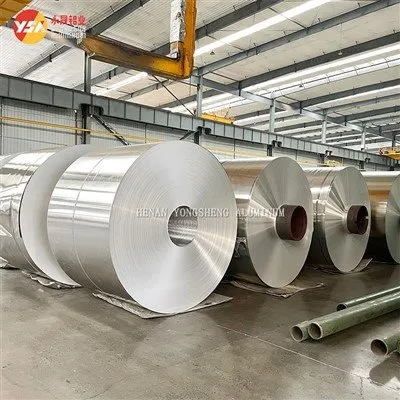
First, let’s set the stage: before aluminum foil, people used tin foil. Yeah, tin—back in the late 1800s, tin foil was the go-to for wrapping chocolate, cigarettes, and even some food. Tin was cheaper than silver, malleable enough to mold around shapes, and acted as a decent barrier against light and moisture. The problem? Tin is a soft metal, so the foil was thick and flimsy, easy to tear, and it had a weird metallic taste that seeped into acidic foods like tomatoes or citrus. Also, tin mining was concentrated in a small handful of places, so supply was inconsistent, and as demand for lightweight packaging grew, tin just couldn’t keep up.
Then aluminum came into play. Aluminum had been a super rare, expensive metal back in the 1800s—so rare, in fact, that when Napoleon III wanted to impress his VIP guests, he served his most important ones with aluminum utensils, while regular folks got tin or gold. The first time aluminum was produced on a commercial scale was around 1886, when two guys—Charles Martin Hall in the U.S. and Paul Héroult in France—independently invented the Hall-Héroult process, which melts aluminum oxide and passes electric current through it to separate pure aluminum. That invention dropped aluminum’s price from about $12 a pound in 1885 to less than $0.40 a pound by 1890. Suddenly, aluminum was no longer a royal gimmick—it was an industrial material.
The first aluminum foil actually made its debut in the late 1800s, not for kitchens, but for wrapping candy. In 1910, a company called Drever Company in Germany set up the first machine to roll aluminum into thin sheets thinner than 0.002 inches. They used it to wrap chocolates, keeping them fresh longer and looking way fancier than tin-wrapped treats. By the 1920s, other brands caught on—cigarette companies started wrapping packs in aluminum foil too, because it kept tobacco dry and the cigarettes fresh during shipping. Back then, though, aluminum foil was still pretty thick, and it was mostly used for packaging, not cooking. People didn’t use it in ovens yet; they were worried it would melt or leach into food.
That all changed in the 1930s, when the manufacturing process got a big upgrade. Engineers figured out how to roll aluminum even thinner—down to 0.0005 inches, almost half the thickness of a human hair. That made it way cheaper and more flexible, perfect for kitchen use. Companies like Reynolds Metals (yes, the same one that’s still a big name in foil today) saw the potential and started marketing it for home use around 1935. They called it “Reynolds Wrap,” and they promoted it as a “miracle kitchen helper” that could line pans, wrap sandwiches, and even cover food while it cooked. At first, though, a lot of housewives were skeptical—they’d grown up with tin foil, and aluminum was a new thing. Reynolds did a ton of demos back then, like giving out free samples at grocery stores, to convince people it was safe and useful.
Then World War II hit, and aluminum foil’s story took a huge detour. The U.S. government banned most civilian use of aluminum in 1942, because aluminum was critical for making military equipment—airplane parts, artillery shells, fuel tanks, even mess kits. All aluminum production was diverted to the war effort, which meant Reynolds Wrap and other kitchen foil brands were off the shelves. That might sound like a bad thing, but it actually made aluminum foil more popular once the war ended. After 1945, aluminum was back for civilian use, and people had spent years watching soldiers use foil for emergency rations, camping, and cooking. They came home ready to grab foil for their own kitchens.
The post-WWII boom turned aluminum foil into a staple in every American home (and soon, homes around the world). By the 1950s, it was used for everything: covering leftovers, wrapping burgers for picnics, even making insulation for attics. Companies started making different types too—heavy-duty foil for grilling, non-stick foil that could go directly on grill grates, even colored foil for kids’ crafts. For a while, it felt like every household had a roll under the sink, and no one thought much about it.
But here’s where the story gets interesting: in the 1970s and 1980s, people started questioning aluminum’s safety. Some studies suggested that aluminum could leach into food, especially when the foil was exposed to acidic foods like tomatoes, vinegar, or citrus. At the time, there was also some vague talk about links between aluminum and Alzheimer’s disease (though most later research dismissed that as unfounded, but it stuck in people’s minds). That led to a dip in sales for a little while—folks started using plastic wrap or glass containers instead. As a supplier, I remember that period clearly; customers would ask all the time if our foil was safe, and some would even switch to alternatives for a few years.
But here’s the thing: manufacturers adapted. They started making foil with a thicker, non-reactive coating that prevented leaching, and they did tons of studies to prove it was safe for food contact. By the 1990s, aluminum foil was back, and it’s been growing in popularity ever since. Today, it’s not just for kitchens—we use it for packaging pharmaceuticals, insulation for buildings, even in electronics (it’s a great conductor, so it’s used in phone chargers and wiring).
Now, if you’re here because you’re looking for aluminum foil paper for your business—whether you’re a caterer, a bakery, a food packaging company, or even a small café—you know how important it is to get the right type. Not all foil is the same, right? There’s standard household foil, heavy-duty foil for grilling, food-grade foil that’s safe for packaging fresh or cooked items, and even foil with different thicknesses for specific uses. As someone who’s been in this business for years, I can tell you that picking the wrong foil can cause headaches—like tears mid-wrap, food leaking through, or even issues with taste or safety.
Over the years, I’ve worked with all kinds of clients, from home bakers just starting out to big national food brands. I’ve heard all the questions: How thick do I need for wrapping hot sandwiches? Is foil safe for freezing meat? Can I use it in a commercial oven? The answers aren’t one-size-fits-all, and that’s why it’s good to have a supplier who knows the ins and outs, not just sells a roll. We test every batch of our foil to make sure it meets food safety standards, and we can help you pick the right type based on what you’re using it for.
I also want to be honest about the environment, because that’s a big concern for a lot of people now. Aluminum foil is recyclable, right? Unlike plastic wrap, which ends up in landfills, aluminum can be melted down and reused over and over again, with almost no loss in quality. That’s a huge plus for restaurants and businesses that are trying to be more sustainable. As a supplier, we make sure our foil is compatible with standard recycling programs, and we can even help with bulk orders to cut down on excess packaging waste.
Wait, let’s go back to the early days for a second—one fun fact I love: in the 1920s, aluminum foil was also used to decorate Christmas trees! People would wrap tinsel around branches, but aluminum foil was cheaper than silver tinsel, so it became a trendy decoration for holiday parties. Who knew this material, now so functional, started out as a fancy candy wrap and a Christmas decoration?
Another thing that surprises a lot of folks: aluminum foil’s ability to block out light and moisture is why it’s used for so much more than food. It’s used to protect medications, because light can make pills go bad. It’s used in art studios to darken spaces for photography, since it reflects light so well. It’s even used in space blankets, the thin, shiny sheets emergency teams give people to stay warm—they trap body heat by reflecting it back, which is all thanks to aluminum.
So why does all this matter, especially if you’re looking for a foil supplier? Because the history of aluminum foil isn’t just a timeline of inventions—it’s a story of how a material that started as a royal gimmick became a everyday essential, adapting to what people needed as the world changed. From candy wrappers to WWII rations to kitchen staples, it’s evolved with us, and that evolution means there are a ton of options out there now.

If you’re in the market for aluminum foil paper—whether you need bulk rolls for a restaurant, food-grade sheets for a bakery, or custom sizes for a specific product—we can help. We know that getting the right material on time, at a fair price, is key for your business. No matter what you’re using it for, we’ve got options that meet your needs, from standard household foil to heavy-duty industrial grades. Don’t waste time guessing which foil will work best; reach out and let’s talk through what you’re looking for. We can answer all your questions, help you pick the right product, and make sure your orders are ready when you need them.
Embossed Aluminum Foil References
- "Aluminum Foil: A History of Innovation and Adaptation." Modern Materials Magazine, 2019.
- "The Hall-Héroult Process: The Invention That Made Aluminum Affordable." Science History Institute, 2021.
- Reynolds Consumer Products. "A Brief History of Reynolds Wrap." 2020.
- World War II Civilian Resource Controls: Aluminum Allocation. U.S. National Archives, 1943.
- "Aluminum in Food Contact: Safety and Leaching Studies." Food and Drug Administration, 2018.
Henan Yongsheng Aluminum Industry Co., Ltd.
We are one of the most reliable aluminum foil paper manufacturers and suppliers in China. With abundant experience, we warmly welcome you to buy high-grade aluminum foil paper for sale here from our factory. All custom made products are with high quality and competitive price.
Address: Gongyi City Industrial Cluster District, Huiguo Town, Gongyi City, Henan Province
E-mail: eric@ysaluminum.cn
WebSite: https://www.ysaluminummill.com/
