If you’ve ever stood on a deep-well drilling site, watching crews juggle heavy pipes, pressure gauges, and emergency response gear, you’ll know not all casing tubes are created equal. As a casing tube supplier who’s been on the ground for 12 years—driving to job sites at 5 a.m., troubleshooting mid-drill failures, and swapping samples with roughnecks and geologists alike—I can tell you this: deep-well drilling isn’t about picking a random pipe from a catalog. It’s about matching the tube to the underground conditions you’re facing, and that’s where most suppliers and even some drill teams go wrong. Casing Tube

I’ve seen it happen too many times: a contractor cuts costs on a cheaper, lower-grade tube, thinking “it’s just a pipe,” only to hit a 1,800-foot limestone layer that chews through the outer wall like acid, or a high-pressure gas zone that collapses a poorly fitted casing mid-drill. The result? Weeks of downtime, tens of thousands in rework, and sometimes even safety hazards. Over the years, I’ve worked with drill teams across oil and gas, geothermal, and water well projects, and I’ve narrowed down the key factors that make a tube right for deep-well drilling—specifically for wells that go 5,000 feet or deeper, where the pressure, temperature, and rock formations turn a simple pipe into a critical component.
First, let’s talk about material grade, because that’s the foundation of any casing tube. For shallow wells (under 2,000 feet), you can get away with carbon steel or even coated steel, but deep-well drilling demands something with higher tensile strength and corrosion resistance. I’ve spent a lot of time testing API 5CT grade tubing—this is the standard set by the American Petroleum Institute, and it’s non-negotiable for deep work. Grade N80 is a go-to for many mid-depth wells, but for anything over 7,000 feet, I’d push for P110. Why? At those depths, the hydrostatic pressure from the weight of the rock and the well fluid can top 15,000 psi, and P110 has a yield strength 50% higher than N80, so it won’t buckle under that stress.
But material grade isn’t just about strength. Corrosion is a silent killer in deep wells. If you’re drilling into a formation with high hydrogen sulfide (H2S)—common in many shale gas wells or some geothermal projects—regular carbon steel will crack faster than a dry twig. That’s where L80-1 chromium-alloy tubing comes in; the 1% chrome acts as a barrier against sulfide stress cracking, which is the leading cause of casing failures in sour wells. For water wells, where acidic groundwater or brine is a problem, you might also consider duplex stainless steel for the production casing, the set of tubes that lines the well after drilling is complete. I’ve supplied duplex tubing to a water well project in West Texas that hit a brine aquifer at 8,000 feet; without that extra corrosion resistance, they would have had to redrill the well two years later, costing twice what the tubing itself did.
Next, casing weight and wall thickness, which sound technical but boil down to practical use on-site. Deep-well casing isn’t installed all at once—it’s “run” in sections, each 30 to 40 feet long, connected with threaded couplings. The weight of the entire string can exceed 100,000 pounds by the time you hit target depth, so the tube’s wall thickness has to be balanced: thick enough to support its own weight while drilling, but not so thick that it adds unnecessary weight that strains the rig’s hoisting equipment. For example, at 10,000 feet, a 9 5/8-inch casing with a 0.545-inch wall thickness (that’s “47 lb/ft” weight, in industry terms) is standard, but if you’re drilling through unstable shales that tend to cave in, you might need a heavier wall—0.595 inches, or 53.5 lb/ft—to add rigidity. I always advise drill teams to check their rig’s lifting capacity before ordering; a common mistake is ordering a thicker wall than the rig can handle, leading to dropped pipe or safety incidents during installation.
Then there’s the type of casing connection, which I’ve seen make or break a deep well, even with the best material and wall thickness. A coupling that isn’t threaded correctly, or made with a weak metal, can let in formation fluid or gas under pressure—something you don’t want when you’re 10,000 feet underground, where a small leak can turn into a blowout or a costly well control incident. For deep wells, I recommend premium connections, not the basic “buttress” threads you might see in shallow wells. Connections like VAM Top or Hydril are designed to withstand high torque and pressure, and they seal better than standard threads. I once had a contractor try to save a few bucks by using standard buttress connections for a 7,000-foot gas well; during a pressure test, three joints separated, and they had to pull 12,000 feet of casing out of the well—something that took three days and cost $120,000 in labor alone. That’s a mistake no one wants to repeat, and it’s one that’s easily avoided with the right connection type.
Wait, I also can’t forget environmental and well-specific factors that are unique to deep wells. If you’re drilling a geothermal well, for example, temperatures can reach 500°F or higher, which breaks down regular steel’s tensile strength. In that case, you’ll need high-alloy steel, like Inconel or Hastelloy, which retain their strength at extreme temperatures. These are more expensive, but geothermal wells have to last 20 to 30 years, so cutting corners here is just bad business. For wells in arid regions where surface casing has to withstand shifting soil (like in parts of the Southwest U.S.), you might need to add a centralizer to the casing string to keep it centered in the wellbore; this prevents the casing from rubbing against the rock wall, which can cause wear and tear during installation.
A lot of drill teams also overlook the importance of casing compatibility with drilling fluids, or “mud.” Deep wells use heavy mud to balance formation pressure, and some muds can react with certain casing materials, leading to corrosion. For example, if you’re using a water-based mud with high chloride content, you’ll want to avoid carbon steel, as chloride ions will pit the metal over time. I always work with my clients to test their mud and formation water before recommending a tube; it takes an extra day or two, but it saves months of downtime later.
Now, let’s address the thing that every contractor cares about: cost. I know everyone wants the cheapest option, but in deep-well drilling, that’s a false economy. I’ve seen so many projects where a $10,000 savings on tubing turned into $100,000 in rework. Here’s the thing: a quality casing tube isn’t just a purchase—it’s an investment. For a 10,000-foot well, the tubing is usually 20 to 30% of the total well cost, but a failure can add 50% or more to the total. When I supply tubing, I don’t just send a pipe; I share a well checklist, tell them what grades work for different formations, and even connect them with independent testing labs to verify the material’s strength. That’s the kind of value that comes from 12 years in this business, not just a catalog of products.
I also want to clear up a common misconception: bigger isn’t always better. A lot of drill teams think a wider casing will be more durable, but wider casings have more surface area exposed to formation pressure, and they’re harder to run through tight wellbores. For most deep wells, the optimal casing size is 7 to 10 inches for production casing, with a smaller surface casing at the top to support the wellhead. The size has to be matched to the well’s target depth and the type of formation—for example, a well in soft alluvial soil might need a larger surface casing than one in hard granite.
At the end of the day, choosing the right casing tube for deep-well drilling is about three things: matching the material to your formation conditions, balancing weight and wall thickness to work with your rig, and using a connection that can handle the pressure and torque of deep installation. As someone who’s been in this industry long enough to see both the successes and the avoidable failures, I can tell you that skimping on casing is never worth it.
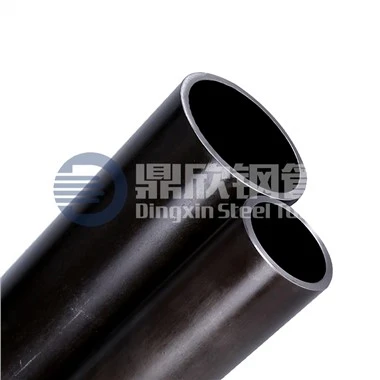
If you’re planning a deep-well drilling project and you’re not sure which tube is right for you—whether it’s for oil, gas, water, or geothermal—don’t leave it to a catalog. I’ve helped hundreds of drill teams across North America pick the right tubing, troubleshoot mid-drill issues, and even source custom sizes for unusual well conditions. I don’t push cheap products; I push the products that will keep your project on time, on budget, and most importantly, safe.
Pre Honed Tube References
API Standard 5CT: Specification for Casing and Tubing, 2021
Harpalani, S., & Goodman, R. E. (1976). Corrosion of Steel in Deep Well Environments. Journal of Petroleum Technology.
National Ground Water Association. (2019). Deep Well Casing Design and Installation Guidelines.
Zhejiang Dingxin Steel Tube Manufacturing Co., Ltd.
Zhejiang Dingxin Steel Tube Manufacturing Co., Ltd. is one of the most professional casing tube manufacturers and suppliers in China. We have world-leading production equipment and strong manufacturing capabilities. Please feel free to wholesale high quality casing tube at competitive price from our factory.
Address: Liuli Industrial Zone, Haiyan, Zhejiang Province, China
E-mail: sales@dingxintube.cn
WebSite: https://www.dingxinsteeltube.com/
