Calculating the pressure drop across a diverter valve is a crucial aspect in many fluid – handling systems. As a diverter valve supplier, I’ve encountered numerous customers who are eager to understand this process. In this blog, I’ll share in – depth knowledge on how to calculate the pressure drop across a diverter valve, which will not only benefit engineers and technicians but also help our potential customers make more informed purchasing decisions. Diverter Valve
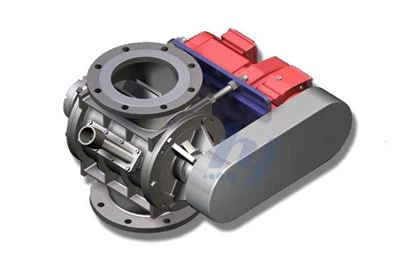
Understanding the Basics of Diverter Valves
Before delving into the calculation of pressure drop, it’s essential to have a clear understanding of what a diverter valve is. A diverter valve is a mechanical device used to control the flow direction of a fluid (either liquid or gas) in a piping system. It can redirect the flow from one path to another, or split the flow between multiple paths. Diverter valves are widely used in various industries, such as automotive, HVAC (Heating, Ventilation, and Air Conditioning), and chemical processing.
The design and construction of diverter valves can vary significantly. Some common types include ball diverter valves, butterfly diverter valves, and plug diverter valves. Each type has its own unique flow characteristics, which will ultimately affect the pressure drop across the valve.
Factors Affecting Pressure Drop
The pressure drop across a diverter valve is influenced by several factors. These factors need to be carefully considered when performing the calculation:
1. Flow Rate
The flow rate of the fluid passing through the diverter valve is one of the most significant factors. Generally, as the flow rate increases, the pressure drop across the valve also increases. This is because a higher flow rate requires more energy to overcome the resistance within the valve. The relationship between flow rate and pressure drop is non – linear, which means that a small increase in flow rate at high – flow conditions can lead to a relatively large increase in pressure drop.
2. Fluid Properties
The properties of the fluid, such as density and viscosity, play an important role in determining the pressure drop. Denser fluids require more energy to move through the valve, resulting in a higher pressure drop. Similarly, more viscous fluids have greater internal resistance, which also contributes to a larger pressure drop. For example, oil has a higher viscosity than water, so for the same flow rate and valve configuration, the pressure drop across a diverter valve when handling oil will be higher than when handling water.
3. Valve Size and Geometry
The size of the diverter valve, including the diameter of the inlet and outlet ports, affects the pressure drop. A smaller valve size restricts the flow more, leading to a higher pressure drop. The internal geometry of the valve, such as the shape of the flow path, the presence of obstructions, and the valve’s opening and closing mechanism, also has a significant impact. For instance, a valve with a more complex internal structure may cause more turbulence in the fluid flow, increasing the pressure drop.
4. Valve Opening
The degree to which the diverter valve is open is another crucial factor. A fully open valve generally has a lower pressure drop compared to a partially open valve. When the valve is partially open, the flow area is reduced, causing the fluid to accelerate through the restricted opening. This acceleration leads to an increase in velocity and a corresponding increase in pressure drop according to the principles of fluid mechanics.
Methods for Calculating Pressure Drop
There are several methods available for calculating the pressure drop across a diverter valve. The choice of method depends on the available data and the level of accuracy required.
Empirical Formulas
One of the most common methods is to use empirical formulas. These formulas are based on experimental data and are often specific to certain types of valves. For example, for a ball diverter valve, a simplified empirical formula for pressure drop ($\Delta P$) can be expressed as:
$\Delta P = K \times \frac{\rho v^{2}}{2}$
where $\Delta P$ is the pressure drop, $K$ is the valve resistance coefficient, $\rho$ is the fluid density, and $v$ is the average fluid velocity through the valve. The value of $K$ is determined experimentally and can vary depending on the valve size, type, and degree of opening.
To obtain the value of $K$, manufacturers usually provide valve performance data sheets. These sheets contain the $K$ – values for different valve sizes and opening percentages. By substituting the appropriate values of $K$, $\rho$, and $v$ into the formula, the pressure drop can be calculated.
Computational Fluid Dynamics (CFD)
Computational Fluid Dynamics is a more advanced method for calculating pressure drop. CFD uses numerical algorithms to solve the governing equations of fluid flow, such as the Navier – Stokes equations. This method allows for a detailed analysis of the fluid flow inside the diverter valve, taking into account the complex geometry and flow conditions.
To perform a CFD analysis, a 3D model of the diverter valve is first created using computer – aided design (CAD) software. Then, the model is imported into a CFD simulation tool. The fluid properties, boundary conditions (such as inlet flow rate and outlet pressure), and other relevant parameters are defined. The CFD software then solves the equations to predict the pressure distribution and flow patterns within the valve.
CFD provides a more accurate prediction of pressure drop compared to empirical formulas, especially for complex valve geometries and non – standard flow conditions. However, it requires significant computational resources and expertise in CFD modeling and simulation.
Manufacturer’s Data
Many diverter valve manufacturers provide pressure drop data based on their in – house testing. This data is usually presented in the form of graphs or tables, showing the relationship between flow rate, valve opening, and pressure drop for a specific valve model.
To use the manufacturer’s data, you need to know the flow rate of the fluid and the degree of valve opening. By referring to the appropriate graph or table, you can directly obtain the corresponding pressure drop value. This method is relatively simple and convenient, but it is limited to the specific valve models and operating conditions for which the data is available.
Practical Example of Pressure Drop Calculation
Let’s consider a practical example of calculating the pressure drop across a ball diverter valve. Suppose we have a water – handling system with a flow rate of $Q = 10 m^{3}/h$, and the water density $\rho = 1000 kg/m^{3}$. The valve has a diameter of $D = 50 mm$ and is fully open.
First, we need to calculate the average fluid velocity $v$. The cross – sectional area of the valve $A=\frac{\pi D^{2}}{4}=\frac{\pi\times(0.05)^{2}}{4}= 0.001963 m^{2}$
The flow rate $Q$ in $m^{3}/s$ is $Q=\frac{10}{3600}=0.00278 m^{3}/s$
The average velocity $v=\frac{Q}{A}=\frac{0.00278}{0.001963}=1.42 m/s$
From the valve manufacturer’s data sheet, for a fully open 50 – mm ball diverter valve, the resistance coefficient $K = 0.5$
Using the empirical formula $\Delta P = K\times\frac{\rho v^{2}}{2}$
Substitute the values: $\rho = 1000 kg/m^{3}$, $v = 1.42 m/s$, and $K = 0.5$
$\Delta P=0.5\times\frac{1000\times(1.42)^{2}}{2}=0.5\times\frac{1000\times2.0164}{2}= 504.1 Pa$
Importance of Accurate Pressure Drop Calculation
Accurately calculating the pressure drop across a diverter valve is of great importance in various applications.
In HVAC systems, an incorrect pressure drop calculation can lead to inefficient operation. If the pressure drop is underestimated, the system may not be able to deliver the required amount of air or water, resulting in poor temperature control and reduced energy efficiency. On the other hand, if the pressure drop is overestimated, oversized pumps or fans may be selected, leading to increased capital costs and energy consumption.
In chemical processing plants, precise pressure drop calculation is crucial for ensuring the safe and efficient operation of the process. Incorrect pressure drop can cause issues such as flow instability, equipment damage, and even safety hazards.
Conclusion and Call to Action

Calculating the pressure drop across a diverter valve is a complex but essential task in fluid – handling systems. By understanding the factors affecting pressure drop and using the appropriate calculation methods, engineers and technicians can make more informed decisions when selecting and operating diverter valves.
Rotary Airlock Valve As a diverter valve supplier, we offer a wide range of high – quality diverter valves with detailed performance data to assist you in your pressure drop calculations. Our team of experts is also available to provide technical support and guidance. If you are in the market for diverter valves or need more information on pressure drop calculations, we encourage you to contact us for a purchasing consultation. We look forward to working with you to meet your fluid – handling needs.
References
- Crane Company. "Flow of Fluids Through Valves, Fittings, and Pipe". Technical Paper No. 410.
- Munson, Bruce R., Donald F. Young, and Theodore H. Okiishi. "Fundamentals of Fluid Mechanics". John Wiley & Sons, 2009.
Shanghai Hanye Engineering Technology Co., Ltd.
As one of the most experienced diverter valve manufacturers and suppliers in China, we offer a wide range of products with superior quality. We warmly welcome you to buy customized diverter valve at competitive price from our factory. For more information, contact us now.
Address: Building 7, No. 428 Banqiao East Road, Shanyang Town, Jinshan District, Shanghai
E-mail: Windy@hanye-tech.com
WebSite: https://www.hanyeconveying.com/
