If you’ve ever stood along a coastline, you know how unforgiving the environment can be. Salt-laden air, high humidity, constant exposure to moisture, and even occasional splash from storm surges can eat away at unprotected materials, turn functional equipment into rusted clutter, and shorten the lifespan of infrastructure most people take for granted. As a meter box supplier, I get asked this question all the time: can a standard meter box be used in a coastal area? The short answer is no—but the nuanced one is that it’s not a hard “no” if you choose the right box, and it’s a critical choice that can save property owners, contractors, and utility companies thousands of dollars in repairs and replacements down the line. Meter Box
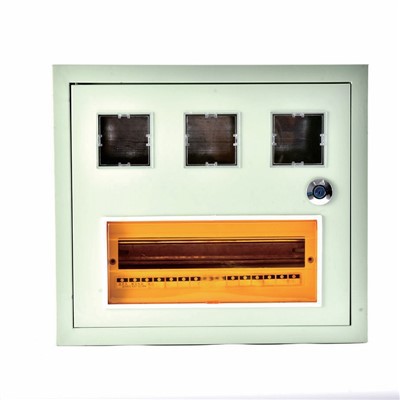
Let’s start with why coastal environments are uniquely harsh for meter boxes, and why standard units fall flat. Most off-the-shelf meter boxes sold for residential or small commercial use are made from materials like thin-gauge steel, basic plastic, or even aluminum that wasn’t formulated for prolonged salt exposure. Salt is a corrosive agent; when it mixes with moisture in the air, it forms a weak acid that eats away at metal. For steel, this means rust that can perforate the box in just a few years, even with a thin paint coat—paint chips, salt gets underneath, and the corrosion spreads from the inside out. Plastic boxes, while less prone to rust, can degrade over time from UV rays (another coastal staple) and salt spray, becoming brittle, cracking, and letting moisture and pests seep in. Aluminum, often touted as rust-proof, actually forms a porous oxide layer when exposed to salt, which traps moisture against the meter and can cause electrical contacts to fail, leading to costly power outages or meter tampering risks.
I’ve seen this firsthand, too. A few years back, I worked with a coastal construction crew in Florida that installed standard steel meter boxes on a new subdivision near the Atlantic. Within two years, half the boxes had rusted through their sides; the corrosion had eaten through the wiring access panels, and several meters had to be replaced because salt had gotten into the casing. That project had to shut down for a month just to replace the boxes, costing the developer over $120,000 in labor and materials. That’s when I realized the gap in the market: a lot of suppliers are selling one-size-fits-all meter boxes, but coastal locations need a purpose-built product.
So, what makes a meter box suitable for coastal use? It comes down to three core factors: material composition, design features, and compliance with local coastal construction standards. Let’s break each down, because this isn’t just about picking a “stronger” box—it’s about picking a box engineered for the specific stresses of salt air and high humidity.
First, material selection is non-negotiable for coastal applications. The best options are marine-grade materials, but not all marine-grade is created equal. Let’s start with metals: hot-dip galvanized steel is a common choice, but not just any galvanized. Hot-dip galvanizing involves coating steel in a layer of zinc at high temperatures, which creates a barrier against corrosion. For coastal areas, we recommend a thicker zinc coating—usually 85 microns or more, compared to the 60 microns used for inland applications. This extra thickness stands up to repeated salt exposure without chipping as easily. For even more durability, some of our coastal clients opt for stainless steel 316L, which is specifically formulated for marine environments. Unlike standard stainless steel 304, which can corrode in high-salt areas, 316L contains molybdenum, which creates a tighter protective layer that resists pitting and crevice corrosion—two of the most common ways salt damages metal in coastal zones. It’s more expensive upfront, but it can last 20 to 30 years, compared to 5 to 10 years for a standard galvanized steel box.
For those who prefer a non-metallic option, high-density polyethylene (HDPE) is a far better choice than basic plastic for coastal areas. Our coastal-grade HDPE boxes are UV-stabilized and treated to resist salt spray degradation. They won’t rust, and they’re lightweight, which makes installation easier, but they’re also impact-resistant—important for areas prone to storm debris or accidental collisions from landscaping equipment. One downside of HDPE is that it can warp in extreme heat, which is a problem in places like the Gulf Coast where summer temperatures regularly hit 90 degrees Fahrenheit or more. That’s why we design our HDPE coastal boxes with ribbed walls and reinforced bases to prevent warping, so they stay tight and watertight for years.
Next, design features matter just as much as material. A meter box might be made of marine-grade steel, but if it has gaps, seams, or vents that aren’t properly sealed, salt and moisture will get inside. For coastal use, we engineer our boxes with fully welded seams instead of bolted or riveted ones—bolt holes are tiny entry points for salt spray, and over time, corrosion will work its way into those gaps. Welded seams create a continuous barrier that keeps moisture out. We also add integrated gaskets to all access panels and door frames; these gaskets are made from EPDM rubber, which is resistant to UV rays and salt, so they don’t degrade or crack even after 10 years of exposure. Vents are another consideration. Inland boxes often have open vents to let out moisture, but in coastal areas, those vents let salt spray in. Instead, we use filtered vents with a hydrophobic membrane—this membrane lets air circulate to prevent condensation inside the box, but blocks salt and moisture from getting in. It’s a small detail, but it’s one that drastically reduces long-term corrosion.
We also design our coastal meter boxes to handle physical stresses unique to coastlines. For example, areas in hurricane zones (like the U.S. Southeast or Caribbean) need boxes that can withstand high winds and storm surge. Our coastal boxes have reinforced mounting brackets that secure them tightly to exterior walls or utility poles, so they don’t become projectiles during a storm. Some models also have a raised base that lifts the box 6 inches above ground level, which protects it from floodwaters that might reach street level during heavy storms. That’s a feature you won’t find in standard meter boxes, because inland areas rarely need flood protection.
Third, compliance with local coastal building standards is a must. Every region has specific requirements for infrastructure in coastal zones, usually outlined by the International Building Code (IBC) or local municipal regulations. For example, in areas with a Coastal High Hazard (CHH) designation, like parts of Florida and North Carolina, building codes require materials that can withstand 100 years of salt exposure. We make all our coastal meter boxes to meet or exceed these standards, so contractors can use them without worrying about failing inspections. Some clients also ask about National Electrical Manufacturers Association (NEMA) ratings—for coastal areas, a NEMA 4X rating is ideal, because it means the box is corrosion-resistant and protected against splashing water, salt spray, and dust. Standard NEMA 3R boxes, which are for outdoor use, don’t meet NEMA 4X standards, so they’re not suitable for high-exposure coastal locations.
Now, let’s address some common misconceptions that people have about coastal meter boxes. One I hear all the time is, “I can just paint a regular steel box to make it work.” While a good paint coat can add a few years of life, it’s not a permanent solution. Salt will eventually seep into any small scratch or chip in the paint, and over time, corrosion will bubble up under the surface, ruining the finish and damaging the box. We see this all the time—property owners will repaint their boxes every 2 to 3 years, but it’s a never-ending cycle that costs more in the long run than investing in a purpose-built coastal box. Another misconception is that plastic boxes are always better for coastal areas. While HDPE is durable, it can become brittle in cold temperatures—an issue in places like the Pacific Northwest, where coastal areas get cool, rainy winters. In that case, a marine-grade aluminum or 316L stainless steel box is a better choice, as it doesn’t become brittle in cold weather.
What about maintenance? Even the best coastal meter boxes need a little upkeep, but it’s minimal compared to standard units. We recommend a simple annual inspection: check the door gasket to make sure it’s still intact, wipe down the exterior with a mild detergent to remove salt buildup, and check for any signs of corrosion (if you’re using a metal box) or cracking (if you’re using a HDPE box). That’s it—no sanding, repainting, or major repairs. For property managers, that means less time and money spent on maintenance, and more peace of mind that their meter boxes will work when they need them most, especially during peak storm seasons.
Let’s talk about a recent project to put this into perspective. Last year, we supplied 400 coastal-grade meter boxes to a new resort development in Grand Cayman, a coastal island in the Caribbean. The resort is in a high-salt, high-humidity environment, and the original plan was to use standard steel boxes to cut costs. But after we explained the long-term costs, the developer switched to our 316L stainless steel coastal boxes. A few months ago, I visited the site to check in—all the boxes were still in perfect condition, no rust, no cracks, no signs of corrosion. The developer told me that even if the stainless steel boxes cost twice as much upfront, they’d save around $80,000 over 10 years by not having to replace or repair standard boxes. That’s the real value of choosing the right meter box for a coastal area.
So, going back to the original question: can a meter box be used in a coastal area? The answer is yes, but not just any meter box. A standard, off-the-shelf unit won’t stand up to salt, moisture, and UV exposure for long. But a purpose-built coastal meter box, made from marine-grade materials, designed with corrosion-resistant features, and compliant with local standards, will last for decades, save you money in repairs, and protect your critical utility equipment.
If you’re planning a project in a coastal area—whether it’s a residential subdivision, a commercial building, a resort, or a municipal infrastructure upgrade—don’t take the risk of using a standard meter box. We’ve worked with contractors, developers, and property managers all over the coastal U.S., Caribbean, and Pacific to provide boxes that are tailored to local conditions, and we can help you pick the right one for your specific needs. Whether you need a HDPE box for a mild, low-salt area or a 316L stainless steel box for a high-exposure hurricane zone, we can provide durable, code-compliant options that fit your budget.

Ready to find the right coastal meter box for your project? Reach out to us to discuss your requirements, ask questions about material options or design features, and get a customized quote. We’re here to help you make a choice that saves you money, time, and hassle in the long run.
Meter Box References
International Building Code, Coastal Construction Requirements, 2021
National Electrical Manufacturers Association, Standard for Enclosures for Electrical Equipment (NEMA 4X), 2020
ASTM International, Standard Specification for 316L Stainless Steel for Marine Applications, 2019
Coastal Zone Management Handbook, U.S. Department of Commerce, 2018
Shandong Qinghua Yike Electric Co., Ltd.
As one of the most experienced meter box manufacturers in China, we also support customized service. We warmly welcome you to buy durable meter box for sale here from our factory. If you have any enquiry about cooperation, please feel free to email us.
Address: No. 378 Taozhuang Village, Zaoyuan Town, Lanshan District, Linyi City, Shandong Province
E-mail: admin@sd-qhyk.com
WebSite: https://www.qhecobox.com/
