What’s the real cost-effectiveness of skew rolling mill rolls? As a supplier who’s been deep in this game for over a decade, I get it—anyone buying these rolls doesn’t just care about the upfront price. They’re asking: “Will this roll save me money long-term, or am I throwing cash at something that wears out too fast?” Let’s break this down like I’d chat with you over a coffee, no fancy jargon, just straight talk. Skew Rolling Mill Rolls
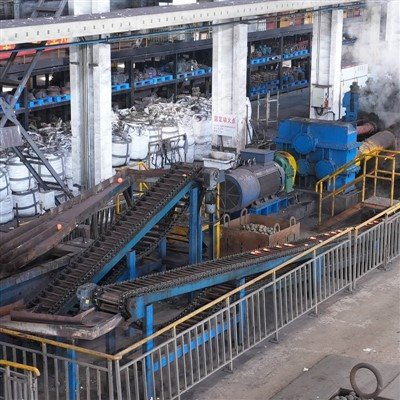
First, let’s set the scene. Skew rolling is that process where you shape round bars, tubes, or special parts by rotating and moving a workpiece at an angle through a pair of rolls. The rolls here take way more heat, friction, and impact than your average mill parts. Cheap rolls might look like a steal at first, but ask any shop floor manager—they’re the ones swapping rolls every two weeks, downtime costing way more than the roll itself. That’s where cost-effectiveness hits different: it’s not about the number on the invoice, it’s total cost of ownership (TCO).
Let’s start with upfront cost vs. service life. A lot of new buyers fixate on 10% lower price for a roll that’s made with subpar steel. But here’s the catch: our rolls, for example, use high-chromium cast iron with a precise alloy mix (we tweak it based on what you’re rolling—steel bars vs. seamless pipes) and a controlled heat treatment process. That means our rolls last 30-40% longer than those budget ones. Wait, let’s do the math. Suppose a budget roll is $800 and lasts 1 month. Our roll is $1,100 and lasts 6 weeks (that’s 1.5 months). Per month, the budget roll costs $800, ours is $733. Already saving, right? But add the hidden costs. Downtime: each roll change takes 2 hours. If your mill runs 2 shifts a day, that’s 4 hours lost for a swap. Let’s say your mill makes $5,000 a day in profit. 4 hours lost is 1/3 of a day, so ~$1,667 lost per swap. That budget roll: swap every 4 weeks, so 13 swaps a year = $21,671 in downtime. Our roll: swap every 6 weeks, 8.6 swaps a year = ~$14,336. That’s a $7,300 saving in downtime alone. And wait—what about scrap parts? A bad roll (worn unevenly) will make lopsided parts, which get scrapped. We’ve had clients tell us budget rolls lead to 2-3% more scrap, while our rolls cut scrap to under 1%. If you make 10,000 parts a month at $10 each, that’s $1,000 lost monthly to scrap with budget rolls, vs $500 with ours. Total savings: $7,300 + $600 = $7,900 a year on top of the roll price difference. See? Upfront cheap = total expensive.
Next, roll performance for your specific application. Cost-effectiveness isn’t one-size-fits-all. If you’re rolling thin-walled seamless tubes, you need rolls with a smooth surface to prevent scratches—our rolls get a precision ground finish that cuts surface defects by half. If you’re rolling high-carbon steel bars, you need rolls that resist thermal fatigue (cracks from heating and cooling) — our alloy mix adds molybdenum, which stops those cracks from spreading. A few years back, we had a client who was using budget rolls for tube rolling; their defect rate was 5%, and they were losing $12k a month on scrap. They switched to our custom ground rolls, and that defect rate dropped to 1.5%, saving them $9k a month. That’s cost-effectiveness in action—matching the roll to what you’re making, not just grabbing the cheapest option.
Then there’s maintenance and support. This is something a lot of suppliers sleep on, but it’s huge for TCO. Our team doesn’t just ship a roll and ghost you. We offer pre-purchase consultations—we’ll ask you what material you’re rolling, your mill’s speed, how often you run shifts, and tweak the roll’s design to fit your setup. For example, if your mill runs 24/7, we’ll add a thicker outer layer to the roll so it can handle constant stress. We also do post-install checks—if a roll isn’t performing as expected, we’ll send a tech out (or walk you through it over a call) to adjust the tension or rotation angle, no extra charge. What about those budget suppliers? You send an email, you wait 3 days for a reply, and if your roll is damaged, they tell you “it’s your mill’s fault” instead of owning it. That downtime you spend waiting for support? More lost money. We’ve had a client tell us their downtime went down 25% after switching because our support team fixed a roll alignment issue in 2 hours, vs the old supplier who took 2 days. That’s another layer of cost-effectiveness no one talks about.
Wait, let’s address a common myth: “All skew rolling rolls are the same.” No, not even close. The difference is in the manufacturing process. Cheap rolls are often sand-cast, which has uneven grain structure—so they wear out faster, especially in high-stress areas. We use investment casting for our rolls, which creates a denser, more uniform grain. That means the roll wears evenly, not just on the edges. Uneven wear leads to parts that don’t meet specs, which is scrap. We also use robotic machining for the surface, so there’s no human error—every roll has the exact profile you need. I’ve seen a budget roll that had a 0.2mm difference in diameter, leading to 10% more scrap. Our rolls? The tolerance is under 0.05mm. Small detail, big impact.
Now, let’s talk about long-term value. A good roll isn’t just a part—it’s a partner for your mill. We track every roll we sell, so if a client’s mill needs a tweak, we can adjust the next order to fit. For example, a construction parts maker was rolling rebar with our rolls, but they upped their mill speed by 10%. We added a bit more chromium to the roll’s surface, so it could handle the higher speed without extra wear. That meant they didn’t have to buy new rolls—just a tweak to the alloy, saving them $5k. Long-term, that kind of flexibility keeps your mill running smoothly, no costly overhauls.
But wait, is there a time when a cheaper roll makes sense? Maybe if you’re a small shop that runs your mill 1 shift a day, rolling low-volume parts. But even then, run the numbers. If your downtime is lower, scrap is lower, and support is there, the slightly more expensive roll usually still wins. I’ve had a small fabrication shop test a budget roll vs ours—they thought the budget one was a win, but after 3 months, they called us saying they spent more on scrap and downtime than the extra cost of our roll would’ve been. They switched, and within a month, they saw a 15% drop in production costs. That’s the real test.
So putting it all together: cost-effectiveness for skew rolling mill rolls isn’t the upfront price. It’s service life, downtime reduction, scrap rate, and support. As a supplier, I’m not here to sell you the priciest roll—I’m here to sell you the roll that fits your operation, so you save money over time.

If you’re tired of swapping rolls every month, dealing with excess scrap, or waiting weeks for support, hit me up. Let’s chat about what you’re rolling, your mill’s setup, and how we can build a roll that works for your bottom line. No fluff, no hidden fees, just straight answers.
Grinding Media References:
- Metal Forming Magazine. (2022). Total Cost of Ownership for Industrial Rolling Components.
- International Journal of Manufacturing Technology and Management. (2021). Alloy Design for High-Performance Skew Rolling Rolls.
- Society of Manufacturing Engineers. (2020). Minimizing Downtime in Rotary Mill Operations.
Shenyang Muren Machinery Co., Ltd.
As one of the most professional skew rolling mill rolls manufacturers and suppliers in China, we’re featured by quality products and good price. Please rest assured to wholesale durable skew rolling mill rolls from our factory. We also accept customized orders.
Address: No.16 Nansan Road, Shenyang Jinhai Economic Zone, Liaoning Province, China
E-mail: mulunjixie@163.com
WebSite: https://www.symurens.com/
