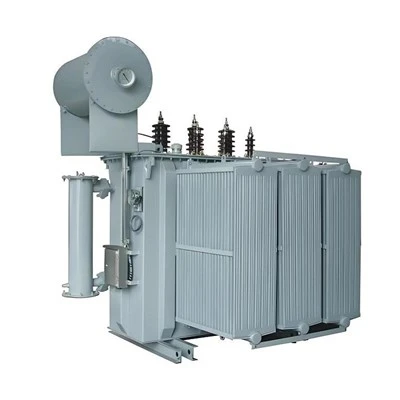
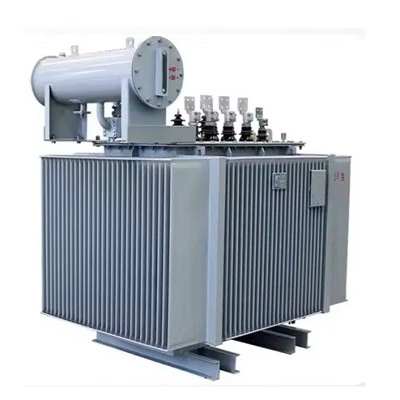
Hey everyone, if you’re in the market for box type transformers (BT Ts, as we call ’em around the shop), you’ve probably heard a bunch of technical jargon thrown around—power factor is one that pops up all the time, and honestly, it’s way more important than it sounds for how your transformer actually runs. I’ve been selling and troubleshooting box type transformers for like 12 years now, so let’s break this down like we’re chatting over a coffee, no stuffy lab talk required. Box Type Transformer
First off, let’s keep it simple: power factor (PF) is basically a measure of how well your electrical equipment uses the power coming into it. It’s a percentage, right? 100% PF means all the power you’re paying for is turning into useful work—like running your lights, tools, or whatever you’re powering with that box transformer. If PF is lower, that means some of that power is getting wasted, just bouncing back and forth between your transformer and the grid instead of doing actual work. That’s where the headache starts.
Now, box type transformers—our bread and butter—are self-contained, right? We build ’em for everything from small commercial shops to apartment complexes, even temporary power for construction sites. Their whole job is to step down high-voltage grid power to the lower voltage your equipment can use. But their design means they have built-in inductance—coils of wire, basically, that create a magnetic field to transfer power. Inductance is what makes a transformer work, but it’s also why PF matters so much here, more than it does for like a simple space heater or something.
Let’s talk real-world examples first, ’cause numbers can be boring. Last year, we had a regular customer—he runs a small retail strip mall with three storefronts, each with a bunch of LED lights, refrigeration units, and a few cash registers. He told us his power bill was through the roof, like $800 more a month than the mall next door, and the electric company even hit him with a “low power factor surcharge.” When we checked his box transformer, his PF was only 0.72—so 28% of the power was wasted. That’s a huge drain. We swapped out a few old capacitors we usually pair with his 45kVA box transformer, bumped his PF to 0.95, and his bill dropped by $720 a month. Dude was stoked, kept calling us like every other week to brag. That’s exactly how bad low PF can hit your wallet.
Now, why does low PF mess with the transformer’s operation, not just your bill? Let’s get into the nitty-gritty a little, but keep it real. Transformers need current to create that magnetic field to do their job. If your PF is low, you need more current to get the same amount of useful power. More current means two big issues: first, the wires and coils inside the transformer have resistance, so more current = more heat. Over time, that heat wears down insulation on the coils, shortens the transformer’s lifespan, and can even cause it to trip or fail if it gets too hot. We’ve got a warehouse full of old transformers we’ve replaced over the years, and almost half of ’em had burnt-out insulation from high heat caused by low PF.
Second, low PF means the transformer isn’t using its capacity efficiently. Let’s say you buy a 100kVA box transformer— that’s the maximum power it can handle without overheating or failing. If your PF is 0.7, that means you’re only getting 70kW of actual useful power out of that 100kVA, because the other 30kVA is wasted as reactive power. So you’re paying for a 100kVA transformer, but you’re only getting the equivalent of a 70kW one. If your load creeps up later, you might think you need a bigger transformer, when really you just need to fix the PF on your current one. That’s a huge waste of money—our job as BT T suppliers is to point that out, not just sell you a bigger unit.
Wait, but what about too high a PF? Is that a thing? Most people think higher is better, right? Yeah, but there’s a sweet spot. Perfect PF (1.0) is actually impossible for transformers, because that would mean no inductance, which would mean the transformer can’t transfer power at all. So we usually aim for 0.9 to 0.95—that’s the sweet spot for our box type transformers. If you push PF way over 0.95, you start running into issues with voltage stability, especially if you have long runs from the transformer to your equipment. That’s why we always tell customers when we deliver a box transformer: if you’re adding a bunch of new equipment that changes your load, give us a holler, we can check your PF and adjust it if needed.
Another thing people don’t talk about: how power factor interacts with a box transformer’s cooling system. Our box type transformers are either air-cooled or liquid-cooled, depending on the size. Air-cooled ones are for smaller units, like 15kVA to 150kVA, good for small shops or home generators. Liquid-cooled are for bigger ones, like 200kVA and up, for apartment complexes or construction sites. If PF is low, the extra current generates more heat, so your cooling system has to work harder. For air-cooled units, that might mean the fan runs non-stop, which uses extra energy and wears out faster. For liquid-cooled ones, it can cause the coolant to heat up too much, leading to leaks or breakdowns. I’ve had a construction site customer a couple years back—their 300kVA liquid-cooled box transformer kept tripping its overheat alarm every afternoon. Turned out their welders on site were pulling a lot of reactive power, PF was 0.65. We added a small power factor correction unit, fixed the PF, and the overheat alarms stopped. They told us their coolant pump lasted twice as long after that.
Now, let’s address the grid side of things, because your transformer doesn’t exist in a bubble. The utility companies care about PF too, so they charge those surcharges I mentioned earlier, usually when PF is below 0.8 or 0.85. But even if there’s no surcharge, low PF puts more stress on the grid lines leading to your transformer. Those lines have their own resistance, so more current from low PF means more power lost in the lines before it even gets to your transformer. That’s another hidden cost people don’t see on their bill.
Wait, I know what some of you are thinking: “Can’t I just fix the PF myself?” For small, simple loads, maybe a basic capacitor works. But box type transformers are sized for specific loads, and if you get the wrong capacitor, you can overcorrect the PF, which we talked about earlier, leading to voltage spikes or even damage to sensitive equipment like computers or refrigerators. That’s why we always recommend talking to us, or a licensed electrician, before messing with PF. As a BT T supplier, we have engineers who can calculate the exact PF your transformer needs, based on your load size and equipment, so you don’t waste money on the wrong fix.
Let’s wrap this up with a quick recap, so you don’t have to scroll back. Power factor is how well your box type transformer uses power. Low PF means more wasted power, higher bills, more heat on the transformer, shorter lifespan, and stress on your electrical equipment. Too high PF is bad too, so aim for that 0.9 to 0.95 sweet spot. If you’re not sure what your PF is, or you’re dealing with high power bills or transformer overheating, hit us up—we’re here to help, not just sell you a new transformer.
At the end of the day, our goal as box type transformer suppliers is to make sure your transformer runs as efficiently as possible, no surprises. We’ve been around long enough to know that a little attention to PF can save you thousands in the long run, way more than any one-time sale. So if you’re shopping for a new box transformer, or your current one is giving you headaches, don’t hesitate to reach out—we’ll walk you through everything, no confusing tech talk, just straight answers.
Oh, and one last thing: if you’re wondering what size box transformer you need, or how PF plays into that, just tell us your load, and we’ll sort it out. No pressure, just real advice from people who’ve been in the game for years.
Three Phase Oil Immersed Transformer References
- International Electrotechnical Commission (IEC) Standard 60076-1: Power transformers – Part 1: General, 2019.
- U.S. Energy Information Administration (EIA): Power Factor and Electrical Efficiency for Commercial Buildings, 2022.
- American Society of Mechanical Engineers (ASME): Effects of Power Factor on Transformer Thermal Performance, 2021.
- National Electrical Manufacturers Association (NEMA): Box-Type Transformer Application Guidelines, 2020.
Zhejiang Jiangshan Hengli Electrical Co., Ltd.
Zhejiang Jiangshan Hengli Electrical Co., Ltd. is one of the most professional box type transformer manufacturers and suppliers in China, featured by quality products and low price. Please rest assured to wholesale cheap box type transformer in stock here and get pricelist from our factory. Customized orders are welcome.
Address: 212 Fuzhu Street Sidu Town, Jiangshan, Zhejiang, China
E-mail: henglijs@foxmail.com
WebSite: https://www.henlypower.com/
