TaxFizzle

  • Home
  • Articles
    • Banking
    • Income Tax
    • Stock Market
    • Others
  • Contact Us
  • Disclaimer

Wednesday, September 8, 2021

Repo, Reverse Repo, Bank Rate, CRR, SLR and their use

 Admin     Banking   

You must have heard or seen people saying “RBI has increased the interest rate.” Or “RBI should cut the interest rate to boost the economy.” Do you know what does it mean? how RBI cuts interest rates? and what are the impacts of it on our economy?
Every country has a central bank that monitors the inflation and growth of that country. In India, we have the Reserve Bank of India (RBI) for this.RBI controls the interest rates and liquidity i.e. supply of money in the economy. Growth and Inflation are managed by RBI by managing interest rates and liquidity. RBI uses these tools for it.
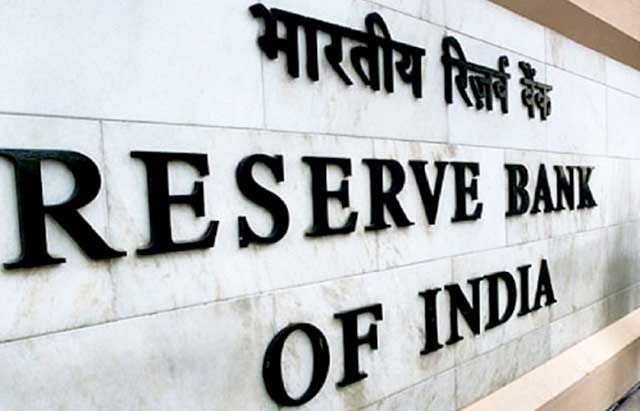
RBI Repo Rate, Bank Rate, SLR, CRR


Repo Rate:
Repo rate is the rate at which the central bank of a country (Reserve Bank of India in case of India) lends money to commercial banks (eg. SBI, ICICI, PNB) in the event of any shortfall of funds.
A repo rate is short for a repurchase agreement in which commercial banks borrow from the RBI in return for the collateral for the short-term government securities. Commercial bank sells securities to RBI and agrees to repurchase these securities after a certain period of time at a pre-determined price. Therefore, the interest rate used in these securities for repurchase is known as a repo or repurchase rate.
Repo rate is used to control the demand-supply of money in the market.
So if there is high inflation in the economy, RBI would increase the repo rate. Now cost of borrowing of commercial banks would increase. The fewer the loans, the fewer funds would be disbursed as loans. Which means less money in the hands of the people which would, in turn, reduce the demand? And due to the reduction in demand, prices would come down and ultimately inflation will be in control.
But if there is depression in the economy, RBI would decrease the repo rate. Now commercial banks have more money for providing loans to the public. Due to it, demand will increase and the economy will grow.
A high repo rate leads to depression in the economy and a lower repo rate leads to inflation.

Reverse Repo Rate:
everse repo is the exact opposite of repo. In a reverse repo transaction, commercial banks buy government securities form RBI and lend money to it for earning interest. The reverse repo rate is the rate at which RBI borrows money from banks.
The Reserve bank uses this tool when it feels there is too much cash floating in the system. An increase in the reverse repo rate means that the banks will get a higher rate of interest from RBI. Due to this, banks prefer to lend their money to RBI instead of lending it others because lending to RBI is comparatively less risky.

Bank Rate:
It is also known as discount rate. It is the rate at which commercial banks borrow money from RBI due to anticipated shortage of funds. Such lending transactions do not involve any collateral.
Bank rate has a direct impact on the lending rates offered by commercial banks to their clients. The lending rate charged to commercial banks is passed down to the customers who borrow loan from these banks. If the bank rate is high, the rate offered by a commercial bank to its clients will also be higher, and if bank rate is low, the lower rate will be charged by commercial banks on the loan issued to the clients.


Bank Rate VS Repo Rate:
The bank rate is charged to commercial banks against the loan given to them by RBI, whereas, the repo rate is charged for repurchasing the securities.
No securities are involved in a bank rate. But a repurchase agreement uses securities as collateral, which are repurchased at a later date.
As the collateral is involved in repurchase agreement, it is comparatively lower than the bank rate.
Repo rate is typically used to cater the short term fund requirements of businesses. So, when RBI increases the repo rate, Liquidity reduces in the economy. However, it doesn’t affect the market rate of interest, because commercial banks bear the additional load of interest to secure their customer base. But when RBI increases the bank rate, it directly affects the lending rate offered to customers, discouraging them from taking loans and reducing the overall growth of economy. Repo rate might leave an impact on the investment amount, but its impact will not be as direct and immediate as a bank rate.

Cash Reserve Ratio (CRR):
Cash reserve ratio is the amount of funds that the banks have to keep with RBI. Say a bank's deposits increase by Rs 1 lakh and if the cash reserve ratio is 9%, the banks will have to hold Rs. 9 thousand with RBI, and the bank will be able to use only the balance 91 thousand for investments and lending, credit purpose.
If the RBI increases the CRR, the available amount with the bank reduces. RBI uses the CRR to curb excessive money from the system. Commercial banks are required to maintain with the RBI an average cash balance, the amount of which shall not be less than 3% of the total of the Net Demand and Time Liabilities (NDTL) on a fortnightly basis, and the RBI is empowered to increase the rate of CRR to such higher rate not exceeding 20% of the NDTL.

Statutory Liquidity Ratio (SLR):
SLR is the percentage of Demand and Time Maturities that banks need to have in any or combination of cash, gold or unencumbered approved securities. High SLR forces commercial banks to maintain a larger proportion of their resources in liquid form and thus impairs their capacity to grant loans and advances which helps in inflationary conditions.
The minimum limit of SLR is 24% and the maximum limit of SLR is 40%. This restriction is imposed by RBI on to make funds available to customers on-demand as soon as possible.

CRR vs. SLR:
Both CRR and SLR are tools in the hands of RBI to regulate money supply in the hands of banks that they can pump into the economy.
SLR controls the bank’s leverage in pumping more money into the economy. On the other hand. CRR is the percentage of deposits that the banks have to maintain with the Central Bank to reduce liquidity in the economy. Thus CRR helps in controlling liquidity in the economy while SLR regulates credit growth in the country.
The other difference is that to meet SLR, banks can use cash, gold or approved securities whereas with CRR it has to be only cash. CRR is maintained in cash form with RBI, whereas SLR is the money deposited in government securities.


Various Rates as of September 7, 2021:

Repo Rate
4.00%
Reverse Repo Rate
3.35%
Bank Rate
4.25%
Cash Reserve Ratio (CRR)
4%
Statutory Liquidity Ratio (SLR)
18%

Read More
  • Share This:  
  •  Facebook
  •  Twitter
  •  Google+
  •  Stumble
  •  Digg

7 Habits to Protect Yourself from Debit/Credit Card Fraud

 Admin     Banking, Others   

How to avoid debit/credit card fraud

Have you heard “Debit Card” or “Credit Card”? Opppss sorry, it is so silly question. Isn’t it? Even a 5 year old child knows about cards. A technological revolution which has changed the way we deal with money. Now we don’t need to go to banks to withdraw cash. We pay by cards when we visit malls, shops or petrol pumps. Online shopping, recharging mobile, paying bills, everything can be done using cards. The card usage has increased, so has the frauds related to the cards. Almost 90% card frauds happen due to negligence of the card holder.

These 7 things you should keep in mind to protect your hard-earned money from these frauds:-

1. Change the default PIN as soon as your receive the card:
Once you receive your card for the first time, activate it immediately, change the PIN and destroy the letter in which old PIN is written. 
Tip: Don’t use the PIN which resembles your birthday, birth year pin code or vehicle number phone numbers. Make it a combination of random 4 numbers. Don’t use PIN like 0000, 1111 or 1234.

2. Destroy the CVV number of the card:
Scratch the CVV number on the back of the card. CVV is one of the mandatory information which is required to complete a online payment through card. Memorize it or write it down in a safe place.

3. Take all necessary steps to keep your PIN OTP, CVV and other sensitive details a secret:
# Memorize your PIN, and never write it on your card or store it with your card.
# Don’t let a cashier or anyone else enter your PIN, even if they are helping you with the transaction.  
# Don’t give your PIN over the telephone. RBI never ask for your PIN, not even your bank.
# Block the view of others when entering your PIN at an ATM or debit terminal.

4. Don’t let anyone enter into the ATM cabin while you are using it:
Frankly speaking, in all steps, this is the toughest. Specially If you are in a country like India where most of the people don’t have enough common sense to understand that ATM usage is a very private activity and they should not enter or look at your screen. Still I suggest you to try to not allow anyone enter the ATM when you are using it.

5. Never leave an incomplete transaction:
Never ever leave ATM screen unless the “welcome screen” appears back. If ATM hangs in between the transaction then don’t leave ATM cabin, call customer care and tell them the whole shit. I repeat “NEVER LEAVE AN INCOMPLETE TRANSACTION”.
  
6. Keep the customer care number saved on the phone:
Always store your card’s customer care numbers on your phone, so that you can inform them about any fraud or issues as soon as they happen.

7. Don’t expose the cash outside ATM:
While coming out from ATM, don’t expose the cash to others. Many people come out of ATM holding the bundle of cash without realizing that someone might be watching them. It is like inviting the snatchers “Hey guys. See I have cash wanna grab this opportunity?” If you want to count, then count it in the cabin and keep properly in your wallet before leaving the ATM.
  
Don’t forget to review your receipt after completing the transaction. Monitor your bank statement regularly. If you want to use ATM at night or in a desolate place then it is preferable to take a friend with you. (Ek or Ek Gyarah. Remember?)

Final Words:  Adopt all these habits and share it with your friends and relatives. I am not saying these things will make you fully protected from fraud but it will surely reduce the chances.

If you like this article and find it useful then don’t forget to share it.
Read More
  • Share This:  
  •  Facebook
  •  Twitter
  •  Google+
  •  Stumble
  •  Digg

Saturday, November 25, 2017

What is Bitcoin its Legality and Taxation in India

 Admin     Bitcoins, Income Tax   


What is Bitcoin

Bitcoin is a Cryptocurrency (virtual money) which can be used as payment method worldwide. Unlike USD which is controlled by Federal Reserve Bank (Feds) and INR which is regulated by Reserve Bank of India no authority regulates bitcoin.

Bitcoins are kept in highly encrypted form in cryptographic wallets holding “Bitcoin Address” and that’s why it is very safe as it is almost impossible to invade these wallets which mean nobody can steal your bitcoins from you.

Bitcoins in India

Transactions in Cryptocurrency are 100% anonymous. So nobody will ever know who made the payment and who received it.

In other words, hacking bitcoin transactions is almost impossible. Moreover, there is almost no chance that the transactions in Bitcoin can be faked. All thanks to this amazing technology called BLOCKCHAIN.

However it is important to note that, it is also impossible to reverse the payments made using bitcoins. Obviously because there are no regulators of Bitcoin.

Bitcoin is divided into “Satoshi” which is 10 crore’th part of a bitcoin just like we divide Ruppee into paisa which is 100’th part of rupee
In INR, One Bitcoin is worth approx Rs.5,20,000 ($8000) today.

So when we buy/sell bitcoin in small amount, we use satoshi like we use grams for sale/purchase of gold instead of kilograms due to its high value.

Why it is an asset and not a currency

Bitcoin can be used to make payments and settle payments still there are two prime reasons why Bitcoin can’t be considered as ‘Currency’, unstable value and slow transaction time.

Unstable Value- The most important feature of a currency is that it holds value which should be stable in nature. Here is 30 days price chart of Bitcoin in INR-

Bitcoin Price


Nobody wants investments or debts denominated in a currency whose value itself changes by more than 80% in 3 months.

Slow Transaction Time- Although to protect the security, blockchain technology is used that makes it so secure, yet processing of Bitcoin transactions is very slow. Sometimes it takes several days to complete a simple transaction due to the limit on number of transactions which can be completed in a day.

Given these drawbacks, the Bitcoins cannot be considered as a currency, but an asset like gold and silver which is used to speculate or to mask transactions from others.


Legal Position of Bitcoins in India

As on date, bitcoins are neither legal nor illegal. Moreover, it is not a legal tender in our country, as per the guidelines issued by RBI in this regard.

RBI had already issued a disclaimer saying that any person dealing with virtual currencies would be doing so at his own risk and recently RBI also said that bitcoins will not be used for making payments and settlements.


Taxation of Bitcoins in India

Even though Bitcoins are not specifically mentioned in the income tax act, yet gains arising due to bitcoins are taxable in India because of the wide definition of income under Section 2(24) under Income Tax Act which means every kind of income is taxable unless clearly exempt and given the wide nature of definition of capital assets under Section 2(14)  and definition of business under section 2(13) of the Income Tax  Act, the purchase of bitcoins, if it has been made for the purpose of investment, should be treated as a capital asset Thus, any gains arising on transfer/sale should be characterised as capital gains and trading in bitcoins are regarded as business and consequently profits and gains arising due to it, chargeable under the head of “Profits and Gains from business and profession”

To check whether bitcoins are held as investment or stock in trade, we need to go through various parameters like frequency of trades, other sources of income etc which we use in classification of income from shares as capital gains or business income.

Generally Bitcoins is considered as capital asset which is usually owned to earn from appreciation in its value. So if the gain is short term i.e. bitcoins are transferred/sold within 3 years of acquisition, it is taxable as per your applicable slab rate. If gain is long term i.e. bitcoins are transferred/sold after 3 years of acquisition, it is taxable at 20% and benefit of indexation of cost is available in this case. So your gain will be Sale consideration less cost of such bitcoins (Indexed cost in case of long term capital gains).

Where there are too many trades in Bitcoins then you are treated as a trader and this income will have to be reported as income from business and it will be taxable as per your slab rates. You can claim all expenses which are incurred wholly and exclusively for trading eg. Internet Bill, Depreciation on Laptop etc.

This income can also be treated as “Income from Other Sources” but I strongly recommend to not to report it as “Income from Other Source”

Read More
  • Share This:  
  •  Facebook
  •  Twitter
  •  Google+
  •  Stumble
  •  Digg

Saturday, February 11, 2017

How to Start Trading in Stock Market in India

 Admin     How To's, Stock Market   

Do you want to trade/invest in share market and then drop the idea because you don't know how to start? This post is just for you.

How to start Trading in Stock Market in India

Basically as a beginner either you have no clue about how to start your journey in share market or you are overloaded with too much correct/incorrect information. Many people that are looking to enter into stock market and try their hand into it, can relate to this situation. So to make it crystal clear, here in this discussion I am going to tell you how you can take your step towards stock market. These are 6 basic steps that you need to take –
GET

1.    Get your PAN number if you don’t have one:
This is the very first step of your journey.It is not possible to have a Trading account without a PAN Card so if you don’t have PAN number, you can apply for it offline/online. Here is the link of official website of NSDL to apply for PAN Card Online where you can apply for PAN. It’s as easy as shooting fish in a barrel.


2.    Open a Bank Account if you don’t have one and Apply for Net Banking facility:
After getting PAN number now you are all set to open bank account. You can open account in any bank which you like. It will be used in Fund Transfer between you and your stock broker. Now all brokers are providing online facilities. So you don’t have to drop a cheque and wait for 2-3 days to load money in your trading account. Fund can be transferred immediately using net banking.

3.    Choose your Stock Broker:
Once you have PAN and bank account, you are eligible to apply for Trading & demat account. The first and foremost step is selecting the stock broker, as you cannot trade in stock market without broker.

There are two types of brokers in the market, "Full Service Brokers" and "Discount Brokers". As the name suggests, Full service brokers provide a variety of services like research, tips/advisory, analysis and personalised relationship management services besides pure execution services. Angel Broking, ICICI direct, IIFL are most popular full service brokers in India.
Where Discount brokers like Zerodha, Tradejini, RKSV usually offer only pure execution services. They charge flat fee execution commissions which are far cheaper (ALMOST NEGLIGIBLE) than the commission of full service brokers.
Selection of broker generally depends on cost, Platform/facilities given by broker and also on what kind of investor you are.
Although it is a matter of choice yet I would suggest you to choose discount broker if you want to be a trader because their brokerage will be less. They provide one of the best trading platform. Also it is best suitable for first timers as it gives great learning experience.

But if you want to be an investor purely, then you should select full service broker because they provide many services like portfolio management, dedicated support etc which are necessary for an investor. They have experts with whom you can consult regarding to your current positions in the market.

4.    Open an account:
When you get a best suitable broker, open an trading and demat account with them. To open an account You need to submit your PAN, An Address Proof like Electricity Bill, Aadhar Card, Voter Card, Passport etc your Bank statement/Cancelled cheque of that account which you want to use in transferring funds. Remember you can not transfer funds from any account other than account specified while opening of trading account. Though you can change it if you want to. You may need to submit your income proof like bank statement or Income Tax Returns if you want to trade in “Future and Options” segment.

Account opening process takes around 2-3 working days depending on your broker. After it you will get your ID/password demat account number, and a welcome kit cum user manual. 

You can open your trading and demat account at zerodha in just 1 day with your Aadhar and PAN. They offer best service at cheapest brokerage (No brokerage for Equity delivery). Account opening process is also totally online.

Click here to open account with ZERODHA


Kudos, Now all procedural part is completed. 

Set

5.    Learn about Platform:
Next step is to learn about various features and tools in platform which is provided by your broker. Platform can be in website format or in computer software or in a mobile app format. Most of the brokers provide all of these. Getting comfortable with the platform is very important so it is advisable to explore the platform as much as you can.


Go

6.    Start Trading:
Lastly the moment you are comfortable with the platform, start your trading.

Now you are ready to make a move. May you be the next Warren Buffet/ Rakesh Jhunjhunwala. My best wishes to you and if I forgot something which you want to know, write in the comments and let me know.


Read More
  • Share This:  
  •  Facebook
  •  Twitter
  •  Google+
  •  Stumble
  •  Digg

Tuesday, August 2, 2016

DHFL NCD, Things you should know before investing in DHFL debentures

 Admin     Debentures, Debt Investments, Stock Market   


          Dewan Housing Finance Limited (DHFL) is issuing Secured Redeemable Non-Convertible Debentures (NCDs) from August 3, 2016.
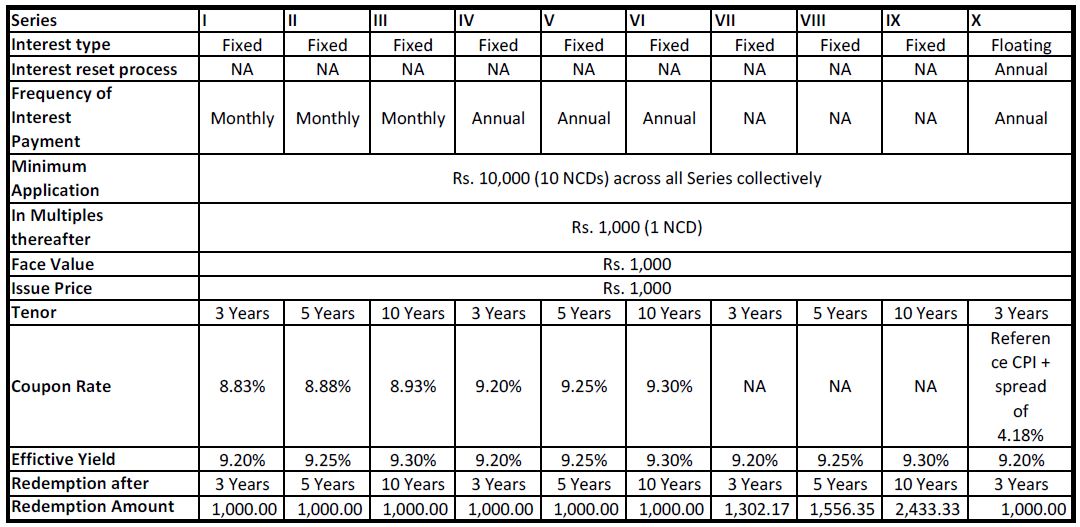
These NCDs will carry coupon rates in the range of 8.83% to 9.30%, resulting in an effective yield of 9.20% to 9.30% for the individual investors. Though the issue is scheduled to close on August 16, but to my view it will get oversubscribed prior to its closing date.


About DHFL:
Dewan Housing Finance Corporation Limited, a deposit accepting housing finance company registered with the NHB and focused on providing financing products for the LMI segment in India primarily in Tier II and Tier III cities and towns. The Company has been active in the housing finance sector in India since 1984. It provides secured finance primarily to individuals, partnership firms and companies for the purchase, self-construction, improvement and extension of homes, new and resalable flats, commercial properties and land. It also provides certain categories of non-housing loans including loans for commercial property, medical equipment, and for plant and machinery.

Size & Objective: The Company plans to raise Rs. 4,000 crore from this issue, including the green shoe option of Rs. 3,000 crore for its lending and financing activities, to repay interest and principal of its existing borrowings and other general corporate purposes.

Credit Rating : CARE and Brickwork Ratings have rated this issue as ‘AAA’ with a ‘Stable’ outlook. Moreover, these NCDs will be ‘Secured’ in nature.

Issue at Floating Coupon Rate also: The Company is offering Series X NCDs which carries floating interest rate based on Reference CPI plus applicable spread. The specified spread shall be 4.18% p.a. for Retail Investors. While the spread will be fixed throughout the tenor of the Series X NCDs, since the floating interest rate on such NCDs is total of Reference CPI plus the fixed spread, floating interest rate will change according to change in Reference CPI. The floor for floating interest rate has been fixed at 8.90% p.a.  and the cap for floating interest rate at 9.50% p.a. For the first year, reference CPI has got calculated at 5.02% p.a., so it is 5.02% + 4.18% = 9.20%.
For instance we have 4.52% as the reference CPI for the next year. In that case, the rate of interest will be (4.52%+4.18%) 8.70% for the second year subject to minimum 8.90% and maximum 9.50%

Key Points of Issue:

  • Investors will have the option to receive interest on a monthly, annual or cumulative basis.
  •  Non-Resident Indians (NRIs), foreign nationals and qualified foreign investors (QFIs) among others are not eligible to invest in this issue. 
  • Minimum investment is for the 10 bonds. Means, you need to invest for a minimum of Rs 10,000. Beyond this you can invest in multiples of 1 bond.
  • Allotment will be made on a first come first served (FCFS) basis. Subject to allocation ratio.

Issuance Mode:  Available in physical form as well as demat form.

TDS : TDS will be deducted if Interest for a particular financial year exceeds 5000/- however NCDs taken in demat form will not attract any TDS.

Listing, Premature Withdrawal & Put/Call Option: These NCDs will get listed on both the national exchanges i.e. Bombay Stock Exchange (BSE) as well as National Stock Exchange (NSE). The listing will take place within 12 working days after the issue gets closed. Though there is no option of a premature redemption, the investors can always sell these bonds on the exchanges. There is no put/ call option for the NCDs.

Categories of Investors & Allocation Ratio:

Category
Allocation
Issue Size (in crores)
Base Issue
Shelf Limit
Qualified Institutional Bidders
20%
200
800
Non-Institutional Investors (NIIs)
20%
200
800
High Net Worth Individuals (HNIs) including HUFs
30%
300
1200
Resident Indian Individuals including HUFs
30%
300
1200
Total
100%
1000
4000

Specific Terms for each series of NCD’s:

Terms of each series of DHFL NC


Risk Factors which you should know before investing:

  •  Business is particularly vulnerable to volatility in interest rates.
  • Any increase in the levels of non-performing assets in its loan portfolio, for any reason whatsoever, would adversely affect its business, results of operations and financial condition.
  • Company indebtedness and conditions and restrictions imposed by its financing arrangements could adversely affect its ability to conduct its business and operations. 
  • In order to sustain its growth, they will need to maintain a minimum capital adequacy ratio. There is no assurance that they will be able to access the capital markets when necessary in order to maintain such a ratio. 
  • As an HFC, they face the risk of default and non-payment by borrowers. Any such defaults and non-payments would result in write-offs and/or provisions in its financial statements which may have a material adverse effect on its profitability and asset quality.

Should you invest in DHFL NCDs?
The company is earning good profits consistently in the last couple of years. This indicates strong repayment capacity of interest from its profits. As far as coupon rate is concerned, there was a time when debentures were issued at 14% to 18% coupon rate but in present where risk free return is around 6% an investor should not expect double digit return from debt securities. Considering this, these debentures seem attractive. Although it carries some element of risk, yet they are secured. Considering high interest rates, secured NCD’s in nature, CPI Linked Interest rates for one of the options, one can consider investing in these NCD’s after assessing risk factors indicated above for a tenor of 3 to 5 years.

Investors, who have high degree of confidence in the execution capabilities of DHFL’s management, can consider investing in these NCDs for a period greater than 5 years .

Conservative investors should avoid these NCDs and explore other options like post office saving schemes, tax-free bonds, debt mutual funds or other listed NCDs.
Read More
  • Share This:  
  •  Facebook
  •  Twitter
  •  Google+
  •  Stumble
  •  Digg
Newer Posts Older Posts Home

Contact Us

Name

Email *

Message *

Categories

  • Banking (2)
  • Bitcoins (1)
  • Compliance Calender (1)
  • Debentures (1)
  • Debt Investments (1)
  • Goods and Service Tax (GST) (1)
  • How To's (1)
  • Income Tax (4)
  • Others (1)
  • Start a Business (1)
  • Stock Market (2)
  • TDS (2)

Find us on

  Facebook
  Twitter
  Instagram
  Youtube

Like us on Facebook

TaxFizzle

Total Pageviews

Copyright © TaxFizzle