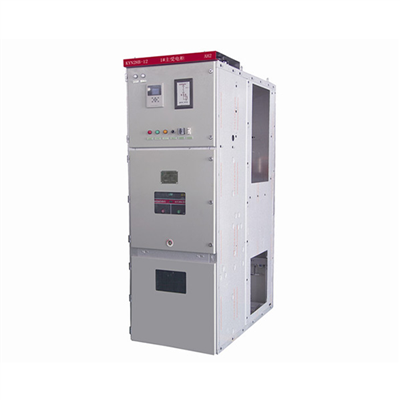
Hey there! I’m a supplier of compact substations, and today I wanna chat about the fault detection methods in compact substations. As someone who’s been in this business for quite a while, I know how crucial it is to keep these substations running smoothly. Faults can lead to power outages, equipment damage, and even safety hazards. So, let’s dive into the different methods we use to detect faults in compact substations. Compact Substation
Visual Inspection
The first and simplest method is visual inspection. It might sound basic, but it’s actually super important. When I go to check out a compact substation, I start by looking at the overall condition of the equipment. I check for any signs of physical damage, like cracks in the insulation, loose connections, or corrosion. For example, if I see rust on the metal parts, it could be a sign of moisture ingress, which can lead to short – circuits over time.
I also look at the indicators on the switches and relays. If a switch is in the wrong position or a relay is tripped, it could indicate a fault. And don’t forget about the cables! I check for any signs of overheating, like discoloration or melting of the insulation. Visual inspection is a great way to catch obvious faults early on, but it has its limitations. It can’t detect internal faults that aren’t visible from the outside.
Temperature Monitoring
Another important method is temperature monitoring. Electrical equipment generates heat when it’s in operation, and abnormal temperature rises can be a sign of a fault. We use thermal imaging cameras to detect hot spots in the substation. These cameras can show us the temperature distribution of different components, like transformers, circuit breakers, and busbars.
For instance, if a transformer is overheating, it could be due to a short – circuit or an overload. By regularly monitoring the temperature, we can identify potential problems before they cause a major failure. We can also set up temperature sensors at critical points in the substation. These sensors can send real – time data to a monitoring system, so we can keep an eye on the temperature 24/7.
Partial Discharge Detection
Partial discharge is a phenomenon that occurs when there’s an electrical breakdown in the insulation of a component. It can cause damage to the insulation over time and eventually lead to a complete failure. To detect partial discharge, we use specialized equipment.
One common method is the use of high – frequency current transformers (HFCTs). These transformers can detect the high – frequency currents generated by partial discharge. We can also use ultra – high – frequency (UHF) sensors, which are very sensitive to the electromagnetic waves produced by partial discharge. By detecting partial discharge early, we can take preventive measures to avoid insulation failure.
Oil Analysis (for Oil – Filled Transformers)
If a compact substation has an oil – filled transformer, oil analysis is a must. The oil in the transformer serves as an insulator and a coolant. Over time, the oil can break down due to heat, electrical stress, and contamination. By analyzing the oil, we can detect the presence of contaminants, such as moisture, gases, and particles.
We use different techniques for oil analysis, like gas chromatography. This method can identify the types and amounts of gases dissolved in the oil. For example, the presence of certain gases, like hydrogen and methane, can indicate a fault in the transformer. By regularly analyzing the oil, we can determine the condition of the transformer and take appropriate action, like replacing the oil or performing maintenance.
Electrical Parameter Monitoring
Monitoring electrical parameters is another key method for fault detection. We measure things like voltage, current, and power factor. Abnormal changes in these parameters can indicate a fault in the substation.
For example, if the voltage is too high or too low, it could be due to a problem with the transformer or the power supply. A sudden increase in current could be a sign of a short – circuit. By continuously monitoring these parameters, we can detect faults early and take corrective action.
Protective Relays
Protective relays are an essential part of a compact substation’s fault detection system. These relays are designed to detect abnormal electrical conditions and trip the circuit breakers to isolate the faulty section.
There are different types of protective relays, such as over – current relays, over – voltage relays, and differential relays. Over – current relays detect when the current exceeds a certain threshold, while over – voltage relays detect when the voltage is too high. Differential relays compare the current entering and leaving a component, and if there’s a difference, it could indicate a fault.
Automation and Remote Monitoring
In today’s digital age, automation and remote monitoring play a big role in fault detection. We can use smart meters and sensors to collect data from the substation and send it to a central monitoring system. This allows us to monitor the substation’s performance in real – time, even from a remote location.
We can also set up alarms in the monitoring system. If a fault is detected, the system can send an alert to the maintenance team, so they can take immediate action. Automation and remote monitoring not only improve the efficiency of fault detection but also reduce the need for on – site inspections.
Conclusion
So, there you have it! These are some of the main fault detection methods in compact substations. Each method has its own advantages and limitations, and in practice, we usually use a combination of these methods to ensure the reliable operation of the substation.
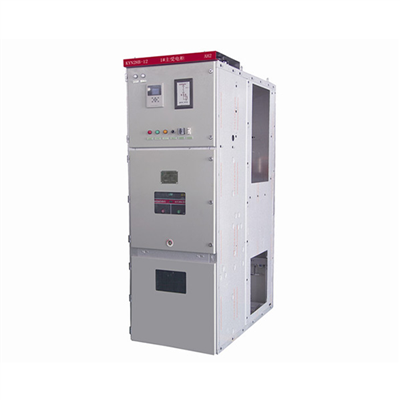
As a compact substation supplier, I’m always looking for ways to improve the fault detection capabilities of our products. We invest in the latest technology and equipment to provide our customers with the best possible solutions.
Compact Substation If you’re in the market for a compact substation or need help with fault detection and maintenance, don’t hesitate to reach out. We’re here to offer you the expertise and support you need to keep your power supply reliable. Let’s have a chat and see how we can work together to meet your needs.
References
- Electrical Power Systems by A. J. Wood and B. F. Wollenberg
- Power System Protection and Switchgear by J. C. Das
- Handbook of Electrical Engineering by John G. Webster
Anhui Xinchen Electrical Equipment Co., Ltd.
We are one of the most reliable compact substation manufacturers and suppliers in China, specialized in providing high quality customized products. We warmly welcome you to buy bulk compact substation for sale here from our factory. Contact us for quotation.
Address: No. 8, Waihuan South Road, Economic and Technical Development Zone, Ningguo City, Xuancheng City, Anhui Province
E-mail: xinchen0316@126.com
WebSite: https://www.cn-xinchen.com/
