Hey there! I’m a supplier of resistance testers, and today I wanna chat about the accuracy class of these nifty devices. So, what exactly is the accuracy class of a resistance tester? Let’s dive right in. Resistance Tester
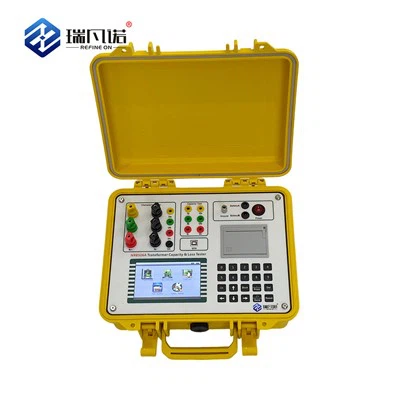
First off, the accuracy class of a resistance tester is a way to measure how precise the readings it gives are. It’s like a report card for the tester, telling you how close its measurements are to the actual resistance values. You see, no tester is perfect. There’s always gonna be some error in the readings, and the accuracy class helps us understand just how much error we can expect.
Let’s break it down a bit. Accuracy classes are usually defined by standards, like those set by the International Electrotechnical Commission (IEC). These standards give a clear set of rules on how to calculate and specify the accuracy of electrical measuring instruments, including resistance testers.
The accuracy class is often expressed as a percentage. For example, a resistance tester with an accuracy class of 0.5% means that the maximum error in its readings is 0.5% of the measured value. So, if you’re measuring a resistance of 100 ohms, the actual value could be anywhere between 99.5 ohms and 100.5 ohms. That’s not too bad, right?
But why does the accuracy class matter? Well, in many applications, getting an accurate resistance measurement is crucial. Take the electronics industry, for instance. When you’re manufacturing circuit boards, even a small error in resistance measurement can lead to malfunctions. A resistor with the wrong resistance value can cause a circuit to draw too much or too little current, which can damage components or make the whole device not work as it should.
In the automotive industry, accurate resistance testing is also super important. Car electrical systems rely on precise resistance values to function properly. If a resistance tester gives inaccurate readings, it can lead to misdiagnosis of electrical problems, which can be a real headache for mechanics and car owners alike.
Now, let’s talk about how the accuracy class is determined. It’s not just pulled out of thin air. Manufacturers use a bunch of tests and calculations to figure it out. They test the tester under different conditions, like different temperatures and humidity levels, to see how the readings change. They also compare the tester’s readings to a known standard resistance.
The accuracy class can be affected by a few factors. One of the big ones is the quality of the components inside the tester. High – quality resistors, capacitors, and other parts can help reduce the error in the readings. Another factor is the design of the tester. A well – designed tester will have better shielding against electromagnetic interference, which can also mess up the readings.
As a resistance tester supplier, I know that different customers have different needs when it comes to accuracy. Some customers, like research labs, need extremely accurate testers. They’re doing experiments where even the slightest error can throw off their results. For them, a tester with a high – end accuracy class, like 0.1% or even better, is a must.
On the other hand, some customers just need a basic tester for general use. Maybe they’re hobbyists or small – scale repair shops. For them, a tester with a more moderate accuracy class, like 1% or 2%, might be good enough. It’s more affordable, and it still gives reasonably accurate readings for most everyday tasks.
When you’re choosing a resistance tester, it’s important to think about your specific needs. Don’t just go for the tester with the highest accuracy class if you don’t really need it. You’ll end up paying more for features you won’t use. But at the same time, don’t skimp on accuracy if you’re working on something that requires precise measurements.
We, as a supplier, offer a wide range of resistance testers with different accuracy classes. We understand that one size doesn’t fit all, and we want to make sure our customers can find the right tester for their needs. Whether you’re a professional in a big industry or a DIY enthusiast, we’ve got something for you.
If you’re in the market for a resistance tester, I’d love to have a chat with you. We can talk about your specific requirements, and I can help you pick the tester that’s just right for you. You can reach out to us to start the conversation. We’re here to make sure you get the best value for your money and a tester that will serve you well for years to come.

In conclusion, the accuracy class of a resistance tester is a key factor to consider when buying one. It tells you how reliable the readings are, and it can have a big impact on the success of your projects. So, take the time to understand your needs and choose a tester with the right accuracy class.
Transformer Oil Tester References:
- International Electrotechnical Commission (IEC) standards on electrical measuring instruments
- Technical documentation from resistance tester manufacturers
Refine On (Hebei) Electric Power Technology Co., Ltd.
Refine On (Hebei) Electric Power Technology Co., Ltd. is one of the most reliable resistance tester manufacturers and suppliers in China, also supports customized service. Please feel free to wholesale advanced resistance tester at competitive price from our factory. Contact us for quotation.
Address: Building 13, Liandong U Valley, No.64, Jing SAN South Street, Economic Development Zone, Mancheng District, Baoding City, China
E-mail: victor@transformer-test.com
WebSite: https://www.transformer-test.com/
